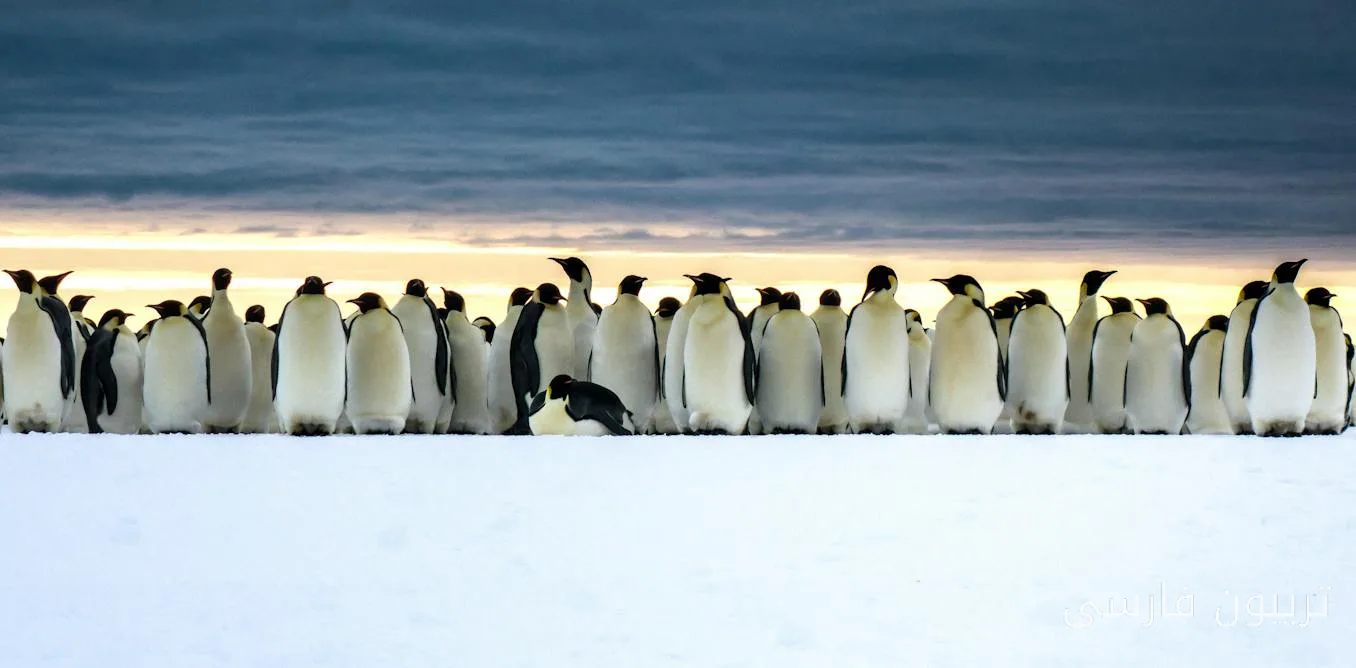
Emperor penguins breed in the winter and raise their chicks in complete darkness. These living conditions have posed a challenge for researchers, as most satellite images are accessible during the day and with sunlight.
New Observations from Satellite Images
However, Grant McDonald and his team at the University of Durham, by examining images of Antarctic sea ice in the winter, noticed "bright spots" in the dark ice that indicated the presence of penguins. This advancement in satellite technology allowed them to continuously track penguins throughout their breeding cycle.
Read more: Australia's New Policies for Standardizing Data Centers and Their Environmental Impacts
Temperature Effects and Environmental Changes
Research shows that the lives of emperor penguins depend on specific conditions that are declining due to climate change. Dana M. Bergstrom, an ecologist at the University of Wollongong, Australia, points out that the "ideal area" for these penguins is shrinking. As a result, the number of penguins has decreased by an average of 22 percent in recent years.
At the same time, heat phenomena in Antarctica have also increased. In July and August 2024, temperatures rose up to 28 degrees Celsius above normal, indicating serious impacts of climate change. If this trend continues, such phenomena are expected to increase 20-fold in the future.
Data collected through satellite images also indicate changes in the food chain on this frozen continent. Research by Cassie Youngflash shows that the color of penguin droppings, especially from Adélie penguins, can indicate the type of food they consume.
In 2026, emperor penguins, along with Antarctic fur seals, were classified as endangered species. This new classification was created due to factors such as temperature changes, changes in food sources, and competition with recovering whale populations. According to researchers, continuous monitoring of these species using satellite technologies is becoming increasingly important.
Read more: Unprecedented Dryness of England's Soils: Is a Water Crisis on the Way? · Challenge of the Deforestation Strategy: Competition Among Three Camps and System Inefficiency