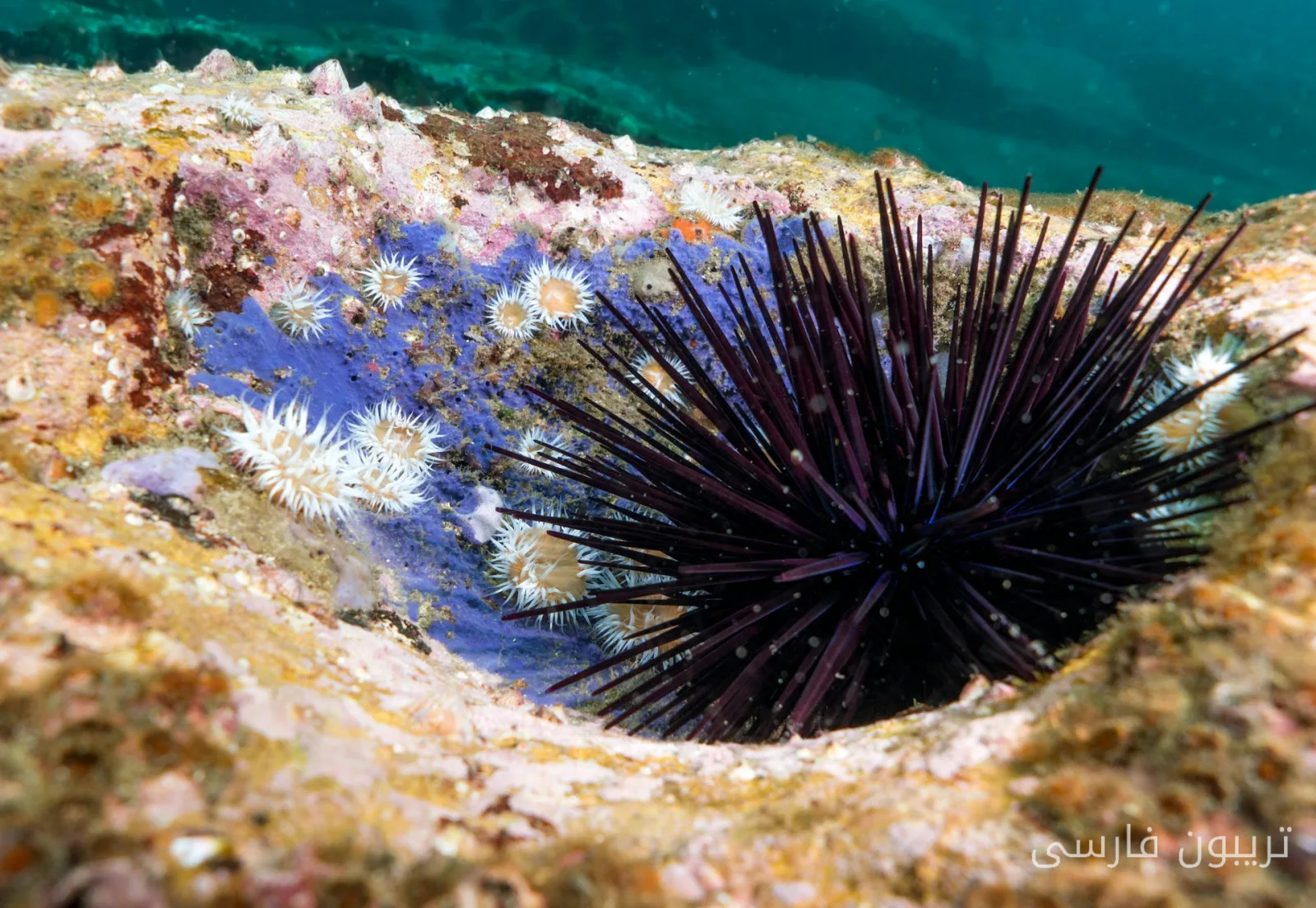
Long-spined sea urchins (Centrostephanus rodgersii) are commonly found on rocky walls and in the underwater forests of golden kelp (Ecklonia radiata) and kelp (Phyllospora comosa) in southeastern Australia. These creatures also inhabit areas known as 'urchin barrens,' places described as lifeless and devoid of life. In media reports, these areas are typically referred to as 'barren landscapes,' where large numbers of sea urchins rapidly contribute to the decline of kelp forests and create new barren areas.
New Realities About Urchins and Barrens
However, this portrayal of barrens and sea urchins is not entirely fair. There are significant concerns about the speed at which barrens are spreading to Tasmanian waters in recent decades due to ocean warming. Yet, in New South Wales, barrens do not appear to be increasing. Barrens can be important habitats and, in some respects, may support more species than kelp forests.
Read more: Unprecedented Dryness of England's Soils: Is a Water Crisis on the Way?
Urchins may also be unfairly judged. Within their native range in New South Wales, the population of long-spined sea urchins has remained stable over time. These urchins have been identified as a key factor in the reduction of kelp forests, as the disappearance of kelp coincides with the increase in the number of urchins. In response, authorities have launched control programs for urchins, where divers remove them from the sea.
New Research and the Complexity of Ecological Relationships
Recent research indicates that this issue is not so straightforward. Seaweeds require cold waters, and with ocean warming, conditions become less favorable for them. Urchins may be merely a symptom of the problem, not the root cause. Long-spined sea urchins, like many other species, are herbivores and feed on seaweeds as well as small worms and other invertebrates.
The question is whether urchins are dependent on seaweeds. In new research, 100 long-spined sea urchins were collected from barrens and kelp forests along the New South Wales coast, and their gut contents were examined. The results showed that they feed on invertebrates and other organic materials in addition to seaweeds. Particularly in New South Wales, the recent decline of kelp forests has been attributed to the feeding of urchins, but our findings suggest they are more dependent on other organic materials.
One common reason for the abundance of urchins is the lack of large predators. Typically, overfishing of eastern rock lobsters (Sagmariasus verreauxi) and other predators has been cited as the main cause of the increase in urchin numbers. But do these predators actually hunt long-spined sea urchins? In the conducted research, it was found that predators do occasionally eat urchins, but rarely. This suggests that the role of predators may be overstated.
Naturally, there are concerns about the disappearance of kelp forests. However, culling urchins and protecting their predators have been proposed as methods to help the kelp. The problem is that culling urchins is costly and difficult, with limited long-term effectiveness. Recent research has shown that when long-spined sea urchins are removed from large areas, those that remain reproduce more quickly.
Urchins may not be the primary cause of the loss of kelp forests, but once the kelp disappears, their feeding on kelp shoots prevents regrowth and maintains the barrens. Seaweeds require cold and salty water, but the coastal waters of Australia are rapidly warming, and large volumes of freshwater from intense flooding are destroying vast areas of kelp. Climate change exacerbates these threats.
Ultimately, the relationships between sea urchins and seaweeds are more complex than they appear. We cannot simply say that urchins are the problem and that the solution is to remove them from the sea. Protecting urchin predators may have little impact on controlling them, but they have their own ecological value. The increase in long-spined sea urchins after the disappearance of kelp may be a sign of a broader collapse rather than the root cause. Long-term solutions need to address the underlying challenge of rapidly warming oceans due to climate change.
Read more: UN Report: Planting Trees in the Wrong Places is Not a Solution to Climate Change · Climate Challenges and Infrastructure Crisis in the Finders Region of England