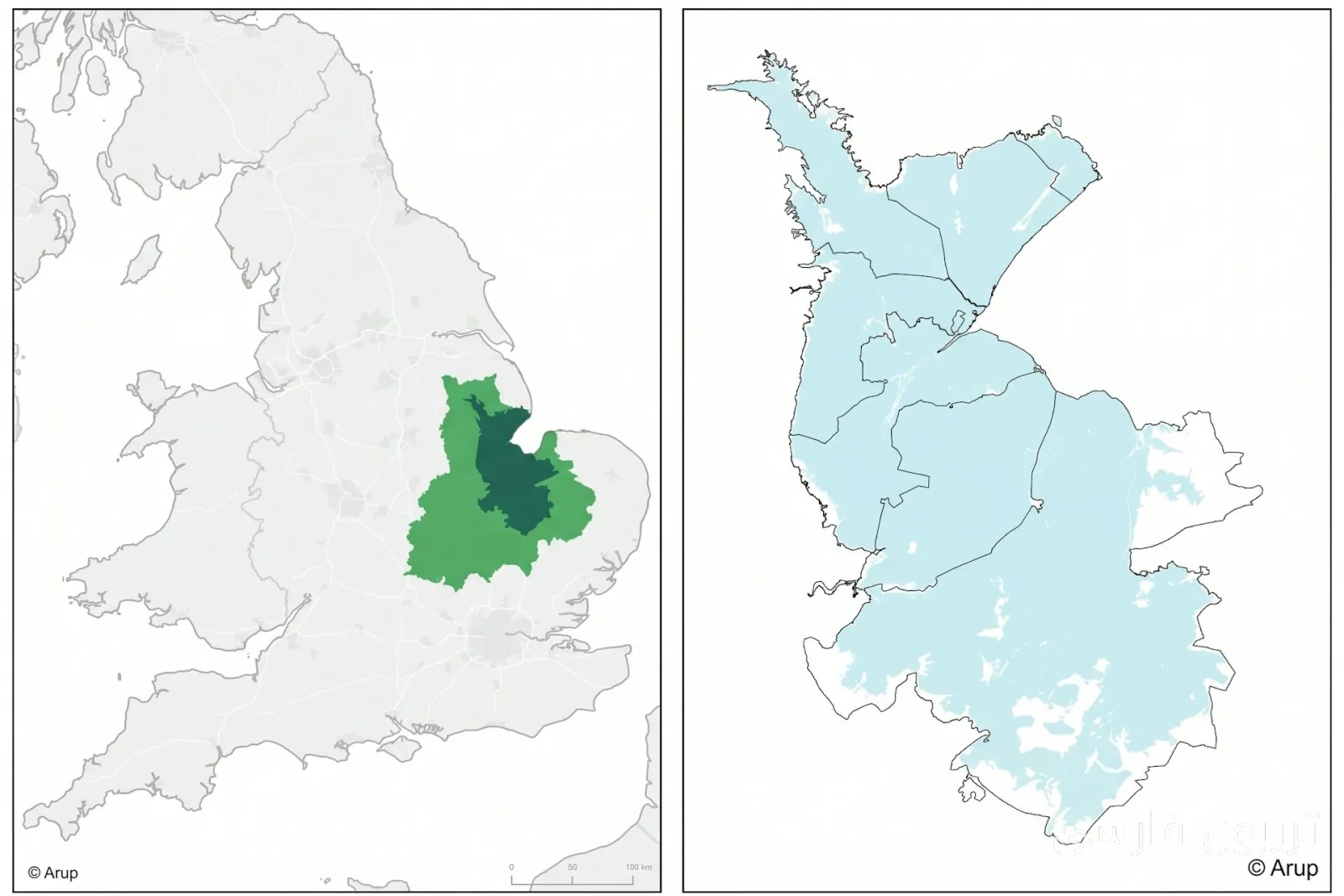
The Fens region, which encompasses parts of Cambridgeshire, Lincolnshire, and Norfolk, is recognized as one of the most important agricultural areas in England, producing one-third of the country's vegetables. However, about 33 percent of this area is below sea level, and 87 percent is below the highest spring tide. This situation has made the Fens one of the most vulnerable regions to climate change.
Climate Challenges and Insufficient Infrastructure
The history of the Fens dates back centuries and its existence relies on complex engineering such as pumps, levees, and waterways that keep water in constant motion. However, climate change has now introduced new challenges that this system was never designed to cope with.
Read more: California and the Reevaluation of Nuclear Policy: Is It Time for Change?
Several climate threats are impacting this region, including rising sea levels, more intense rainfall, hotter summers, and longer droughts. These risks operate as an interconnected system, exacerbating one another. Studies have shown that with a temperature increase of about 2 degrees Celsius, the region will face frequent flooding, more intense heat, reduced river flows in summer, and loss of biodiversity.
Economic and Environmental Consequences
Predictions indicate that if temperatures rise to 4 degrees Celsius, the annual flood damage to homes and businesses in this region will increase from £16 million today to £250 million. Additionally, the region's ecosystems may be completely destroyed, and parts of the Fens could become uninhabitable without major investments in infrastructure.
Most importantly, rising sea levels are considered a fundamental threat that will continue even if global temperatures stabilize. This means that radical adaptation approaches will be necessary in the long term to address these challenges. The necessary decisions for adaptation must be made sooner, as significant changes in infrastructure and land management take decades to implement.
The Fens 2100+ program, published in April 2026, examines the flood risk management system in this region and shows that over one-third of these defenses need updating in the next 15 years. This program emphasizes that to tackle the challenges, the Fens must be viewed as a connected and integrated landscape, with decisions regarding flood protection, water, agriculture, and the environment made simultaneously.
Climate challenges in the Fens are seen not only as a local crisis but also as a global example of similar problems in other coastal areas such as the Netherlands and the Mekong Delta in Vietnam. The approaches developed in this research can help other regions explore adaptation options and learn from the experiences of the Fens.
Read more: England: Tea and Melons Grow in High Temperatures! · Court Overturns Trump's Order to Continue Operation of an Old Coal Plant