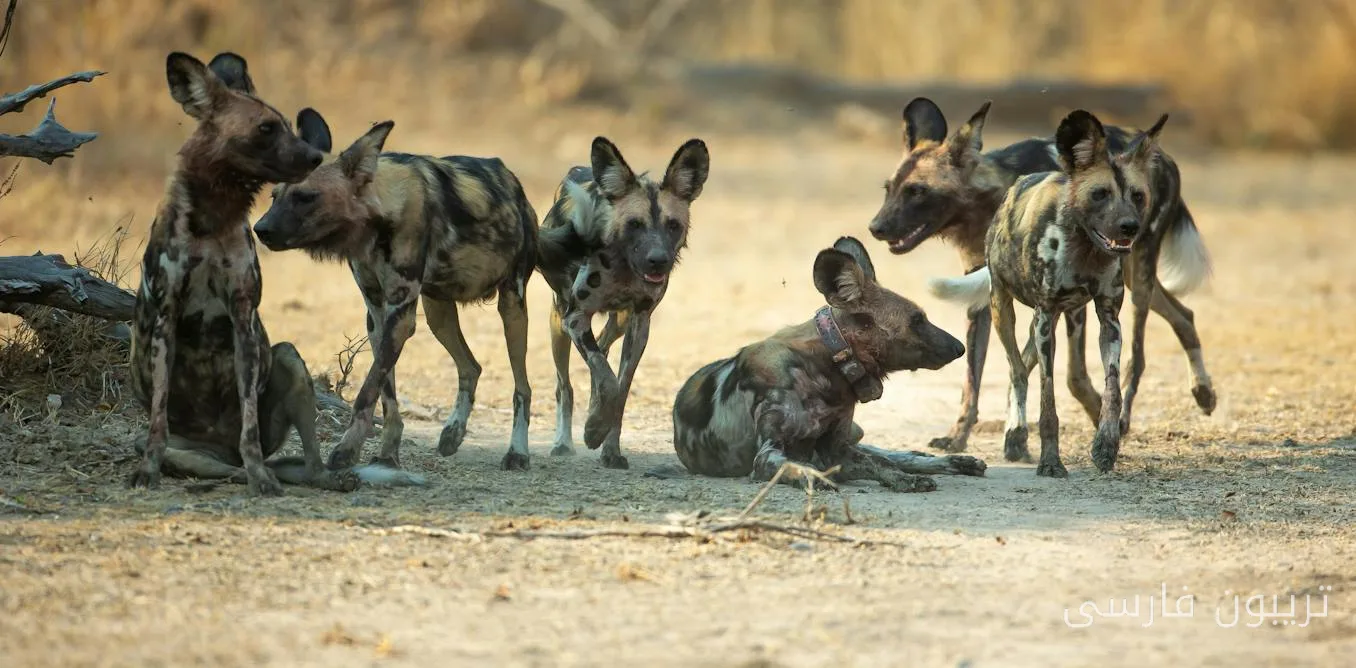
African wild dogs (Lycaon pictus), as one of the large carnivorous species at risk of extinction, are striving to find suitable mates through their long-distance travels. The recent journey of a group of wild dogs that covered a distance of 4,126 kilometers not only sets a new record for this species but also represents a glimmer of hope for their survival in the challenging conditions they face.
Background and Remarkable Journeys
In 2021, a female wild dog named EWD-1355 traveled over 2,300 kilometers in South Africa for a year. This journey is considered one of the longest recorded travels for this species. Since then, evidence of other journeys has emerged, indicating that a group of three males has traveled even further. As a wildlife conservation scientist, I have studied wild dogs in Zambia and have observed interesting behaviors from these animals during this time.
Read more: Data Center Pollution: A Serious Threat to Community Health
Challenges and Consequences of Travels
Despite these long and remarkable journeys, wild dogs face numerous challenges. Dangers such as wire traps for hunting, along with natural threats like lions and crocodile-infested crossings, put their lives at risk. Our data shows that more than half of the tracked wild dogs lose their lives during these travels.
The journeys of this species are not only related to mate searching but are also essential for maintaining their population dynamics. Wild dogs require vast and connected areas to interact with other populations. With habitat loss, there may be a need to relocate them between protected areas to prevent the extinction of small populations.
The results of this research indicate that wild dogs are still striving to cover long distances to find suitable mates, which is a sign of their natural survival. Additionally, their travels help connect the main populations in Zambia and contribute to maintaining genetic diversity.
However, the challenges present along these journeys highlight the urgent need for habitat protection and the reduction of human threats. Without these actions, wild dogs may face an even greater risk of extinction, and these remarkable journeys and signs of hope for their survival may soon become a story of the past.
Read more: Big Changes in the Fashion World: California's Plan for Managing Textile Waste · Why We Should Be Concerned About Bluebirds