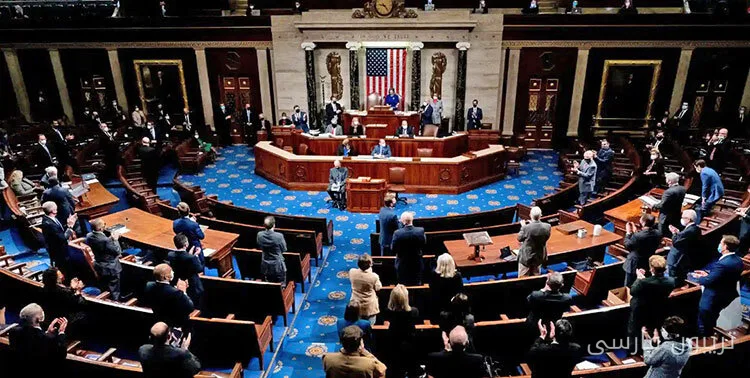
The U.S. House of Representatives has passed a bill specifically addressing new sanctions against Iran and Russia. This 61-page law, known as the "Lindsey O. Graham Russia and Iran Sanctions Act of 2026," seeks to reduce the revenue sources that support Russia's ongoing war in Ukraine. The passage of this bill follows the U.S. Senate's approval last month with 86 votes in favor and 11 against.
Objectives and Details of the Bill
This bill, considered the most ambitious U.S. action to support Ukraine since Donald Trump's return to the White House, aims to end a two-year stalemate on this issue. Volodymyr Zelensky, the President of Ukraine, had pressured senators to pass this proposal and requested their support for the bill. Under this law, Russian officials, banks, and oil tanker fleets that assist in Russian energy exports will be sanctioned.
Read more: The Australian government seeks to grant AI companies access to Australia's creative works
Additionally, Trump will be required to impose tariffs of up to 100 percent on the five largest importers of Russian oil or natural gas. However, countries that import less than 15 percent of Russia's natural gas and take steps to reduce these imports will be exempt from these tariffs.
Consequences and International Impacts
The Center for Strategic and International Studies has stated in its assessment of this bill that the most significant new authority created by this law is the ability to impose tariffs on third countries that purchase substantial amounts of Russian energy. Thus, this bill could impact international trade and economic relations, especially regarding China, which is recognized as one of the largest buyers of Russian energy.
The Atlantic Council has also pointed out that this law allows the Trump administration to impose tariffs of up to 100 percent on goods imported from China if China continues to purchase Russian oil. This approach is somewhat based on the assumption that imposing tariffs will compel China to reduce its energy imports from Russia.
Ultimately, this bill also addresses the extension of sanctions aimed at reducing the financial resources of Iran's arms and energy sectors. Consequently, the Iran sanctions law of 1996 will also be extended, and additional sanctions against Iran and Russia will be considered. These measures reflect the serious determination of the U.S. to confront its national security threats and those of its allies.
Read more: Research on the conflicting feelings of people towards robots · Greg Stanton: The U.S. is in a good position in the Red Sea crisis