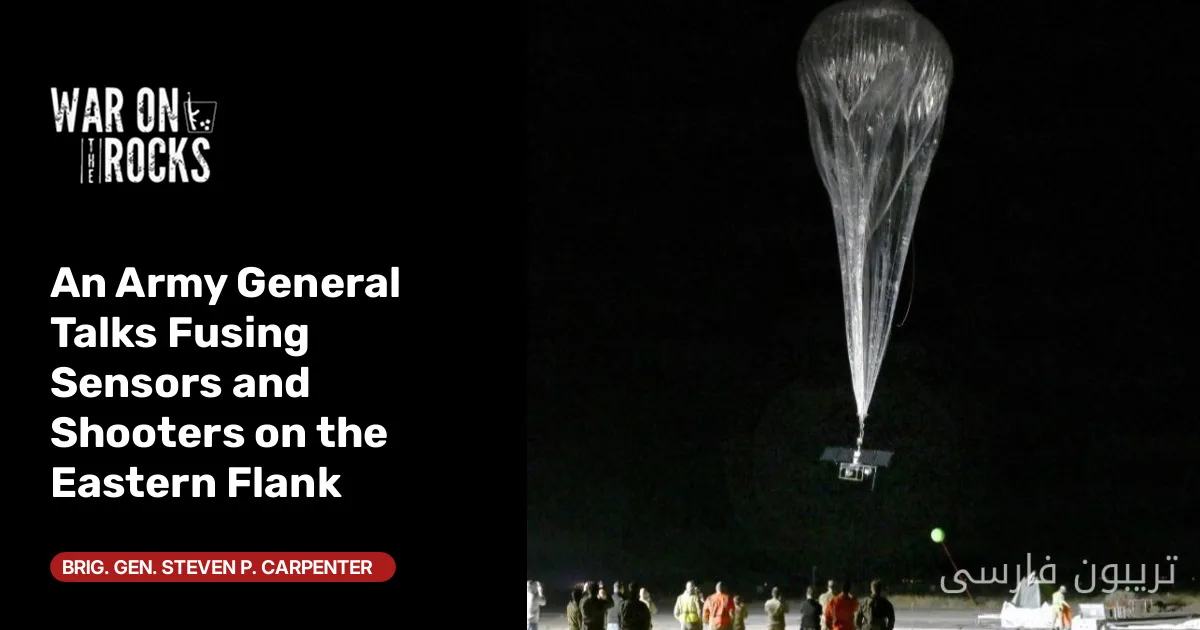
General Steven P. Carpenter, as the commander of the Multi-Domain Command Europe, discussed strengthening sensor coordination and operations on the Eastern Front in an interview. This discussion took place after the annual exercise Arcane Thunder 26, which aimed to assess the capabilities of multi-domain teams in executing coordinated operations.
Advancements in the Use of High-Altitude Balloons
One of the most significant achievements in this exercise was the ability to demonstrate a complete chain of target destruction using high-altitude balloons. These balloons allow commanders to receive information and direct operations immediately and at a lower cost. The balloons are equipped with sensing and communication equipment that supports multi-domain operations and provides a better understanding of the battlefield situation.
Read more: Australia and Brazil Cooperation in Defining Critical Mineral Conditions
Carpenter noted that high-altitude balloons are designed to support electromagnetic warfare and intelligence gathering, stating, "These balloons provide an organic and independent coverage that the commander has access to without needing to request from other units." This change is considered a fundamental step in transforming the stratospheric space from a transit corridor to a maneuverable weapons space.
Challenges and Limitations
Despite the advancements, Carpenter also pointed out existing challenges. Limitations in training policies affect access to the electromagnetic spectrum, and in real conditions, the ability to utilize all capabilities is restricted. He emphasized that to advance objectives in a real war, collaboration with hosts and partners is necessary so that the training environment can effectively simulate the complexities of the multi-domain battlefield.
Another major challenge is the large volume of data that military personnel face. Carpenter mentioned that "we are drowning in data," stressing the need to process and prioritize this data to ensure that each shooter hits the right target at the right time. This raises the need to utilize artificial intelligence and machine learning to process data and eliminate unnecessary noise.
Finally, Carpenter referred to the issue of interaction between coalitions, stating that the transfer of targeting data between different systems, especially from U.S. sensors to Polish and Dutch fire systems, remains a major friction point. He emphasized the necessity of standardizing networks and data formats to enable optimal cooperation among NATO member countries.
This exercise also marked the first time the Multi-Domain Command hosted a multinational cyber range, allowing the command's intelligence defense team to train with NATO allies in a virtual cyber environment. These collaborations could help develop and strengthen joint defensive capabilities.
Read more: Language Changes in Referring to Individuals with Mental Disorders and Disabilities