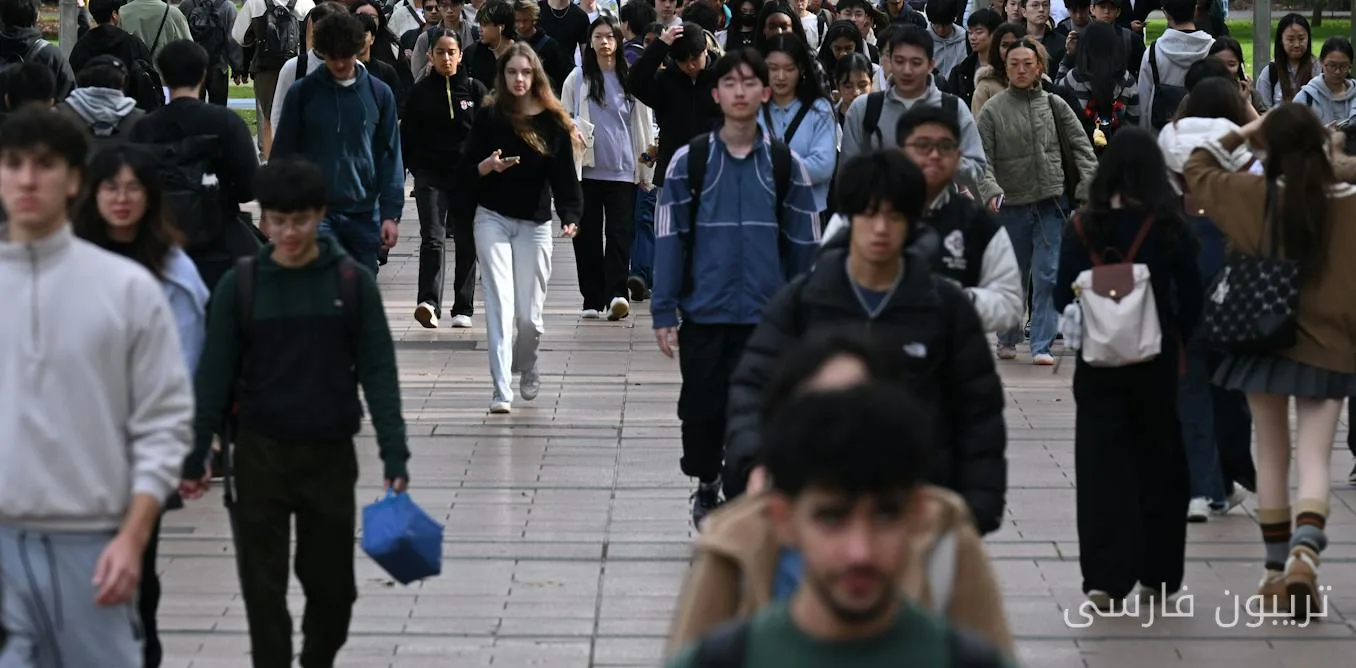
The Australian government has recently announced changes to visa regulations for international students, making conditions tougher for this group. According to these changes, international students can no longer easily bring their families to Australia, and new rules have been established to prevent "visa hopping."
Details of the Visa Regulation Changes
The Australian Minister for Home Affairs, Tony Burke, has described these changes as part of a more comprehensive approach to reduce net immigration from abroad. According to his announcement, most international students will have to come to Australia alone, with only individuals from Pacific and ASEAN countries and PhD students being exempt from this rule. Last year, over 45,000 visas were granted to the family members of international students.
Read more: Australia and Brazil Collaborate on Defining Critical Mineral Conditions
Burke also announced that the government will focus on preventing "visa hopping." This means that students must prove they are progressing towards a higher educational course in order to extend their student visa. These changes clearly indicate the government's ongoing efforts to reduce the number of international students in the country.
Economic and Social Implications
These changes come at a time when the number of international students in Australia has significantly increased. The number of students on graduate visas has risen from 70,000 in June 2019 to 199,000 in June 2026. This increase has been particularly notable following the pandemic and indicates a rapid return of students to Australia. However, it seems that the government intends to reduce the number of new international student entries with these new regulations.
Analysis of immigration data shows that the visa rejection rate for international students has significantly increased in the past six months. The government attributes this increase to stricter enforcement of the financial capability test for students. This test requires students to prove they can adequately support themselves in Australia.
Meanwhile, a new proposal from the "One Nation" party to reduce the number of international students to 350,000 has been raised, which could have serious implications for the university sector and the Australian economy. According to the Australian Bureau of Statistics, international education generates $54.7 billion AUD annually, with $24.3 billion coming from student fees.
Given the various dimensions of these changes, it is important for Australia to achieve a clearer picture of its goals regarding international education and how to integrate it with immigration programs. This requires decision-making about which skills should be prioritized and how education, immigration, and workforce planning can collaborate.
Read more: The US-Saudi Nuclear Agreement Has Improved · The Impact of El Niño and Rising Food Prices in Australia