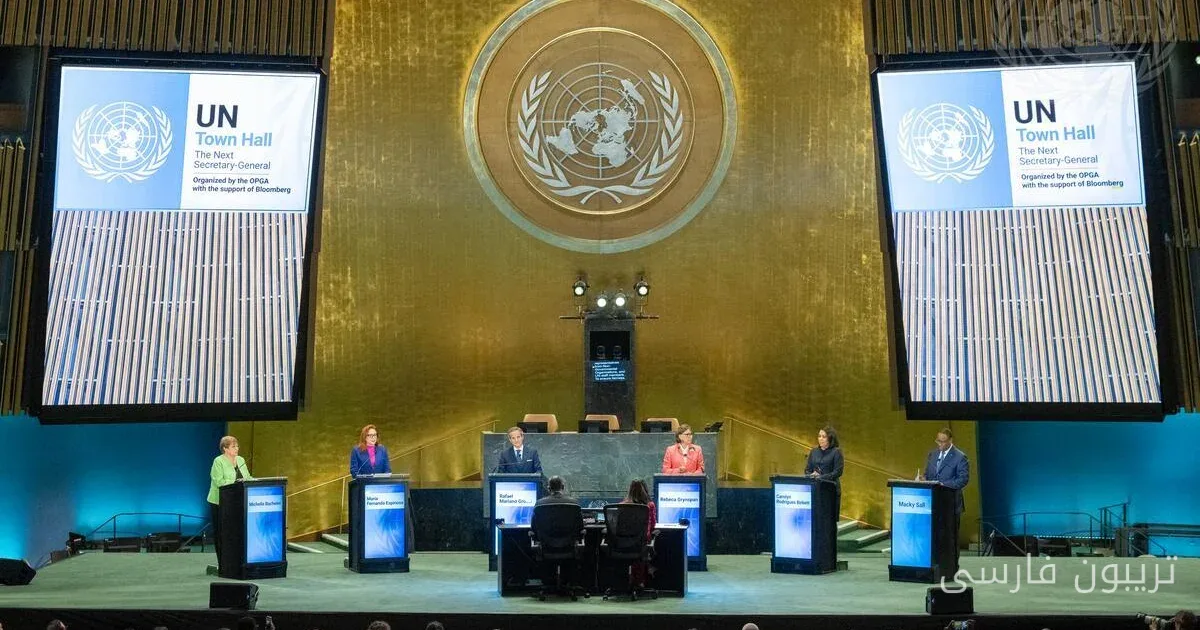
Over the past 80 years, the United Nations has not only been recognized as a global entity but has also been seen as a standard for gender equality and human rights. However, now with António Guterres stepping down from the Secretary-General position, the organization faces a serious challenge: Can it fulfill its promises regarding gender equality?
History of the Secretary-Generalship and Upcoming Challenges
So far, nine men have been appointed as Secretary-General of the United Nations, and this position has been described as "the hardest job in the world." Guterres, the current Secretary-General, has managed multiple crises during his two-year term, including the COVID-19 pandemic and international tensions. Nevertheless, he has also been unable to improve the disarray within the organization, and now the next Secretary-General will have to confront even greater challenges.
Read more: India's Role in the BRICS Southeast Asia Betting
Among the eight announced candidates, five are women. This reflects changes in the leadership level of the United Nations and global pressures to select a woman as Secretary-General. In fact, this selection is not only important for gender equality but could also enhance the credibility of the United Nations.
Pressure to Select a Woman and Future Steps
In recent years, efforts to select a woman as Secretary-General of the United Nations have increased. Coalitions like GWL Voices have launched a campaign called "Madam Secretary-General" to promote women's candidacies. Meanwhile, member states of the Security Council and the General Assembly are strongly emphasizing the nomination of women and urging other countries to nominate women as candidates.
However, the selection of the new Secretary-General occurs in a context where interactions within the Security Council have become highly polarized and transactional. It is expected that the United States and Russia are likely to prevent the selection of a woman, arguing that choosing based on gender is inappropriate. These challenges could impact the selection process and in some way reflect a lack of global consensus on gender equality.
Ultimately, the selection of the new Secretary-General of the United Nations is seen not only as a political event but also as a test for the global institution in improving gender equality and transparency in leadership. If the United Nations can appoint its first woman as Secretary-General, it will not only fulfill its promises regarding equality but can also serve as a model for other institutions and countries around the world.
Read more: The Hungarian Government Led by Péter Márki-Zay Seeks to Restructure Public Media · The Collapse of Sweden's Right-Wing Coalition and the Resignation of Ulf Kristersson