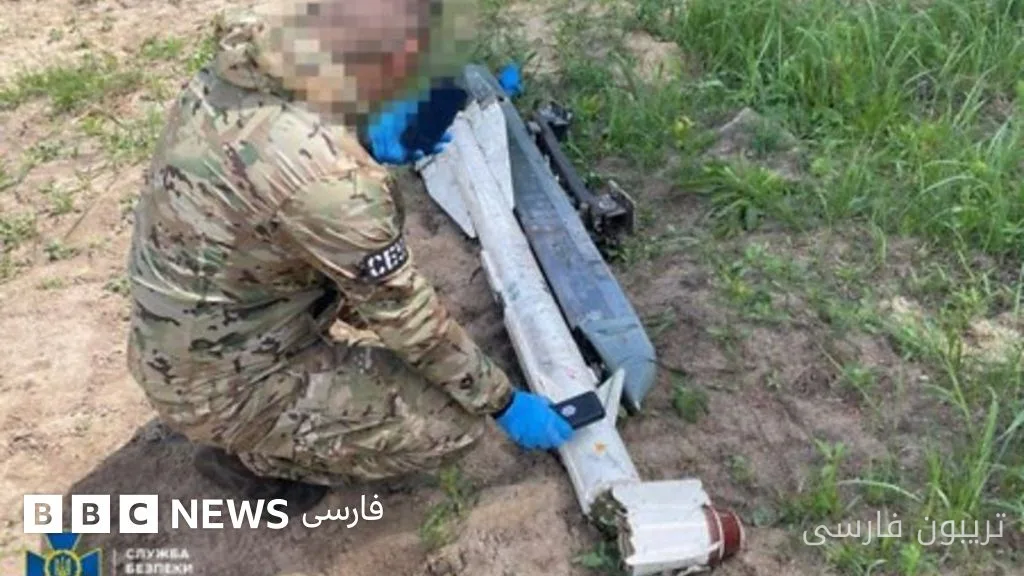
Russia has used drones in its attacks on Ukraine that are armed with missiles containing depleted uranium. This information has been released through field investigations and evidence obtained from downed drones in Ukraine. At least 10 of these drones, which are related to Russian Shahed drones, have been identified in northern Ukraine.
Evidence and Details
Each of these drones carried an R-60 missile equipped with depleted uranium rods. Depleted uranium, which is used in conventional weapons due to its high density, is generally assessed to pose minimal risks from radiation. The Security Service of Ukraine (SBU) has confirmed that it identified 9 Shahed drones equipped with these missiles between April and July 2026, most of which were found in the Chernihiv and Sumy regions.
Read more: The Social Democratic Party of Sweden Returns to Power but Faces Serious Challenges
These missiles are designed to target Ukrainian interceptor aircraft. Serhiy Beskrestnov, a Ukrainian expert in drones, has pointed out the dangers of these missiles, stating that the primary goal of these missiles is to shoot down aircraft, not to cause contamination.
Consequences of Using Depleted Uranium
However, the use of depleted uranium in military munitions has always been accompanied by significant controversies. The International Atomic Energy Agency has stated that contact with munitions containing this material should be managed in a way that minimizes its risks. At the same time, a report from the United Nations Environment Programme has highlighted the potential adverse effects of using these materials, addressing risks such as skin irritation, kidney failure, and increased likelihood of cancer.
Past experiences, such as the use of depleted uranium in the Gulf Wars, Kosovo, and Iraq, have raised serious concerns about the humanitarian and environmental consequences of such weapons. Vladimir Putin, the President of Russia, in response to Western plans to send depleted uranium munitions to Ukraine, has declared this action a violation of international humanitarian law and has called for attention to the consequences of such weapons.
Ultimately, Russia's use of drones containing depleted uranium in Ukraine not only signifies an escalation in hostilities but also poses serious implications for public health and the environment in the region. This issue could reignite international concerns about the use of weapons containing hazardous materials in wars and fuel more serious discussions about the laws and regulations governing the use of such weapons.
Read more: Iran and the Convention on the Legal Regime of the Caspian Sea; From a 20 Percent Share to a Legislative Model · Escalation of Nuclear Tensions in the Ukraine War with Attacks on the North Pole