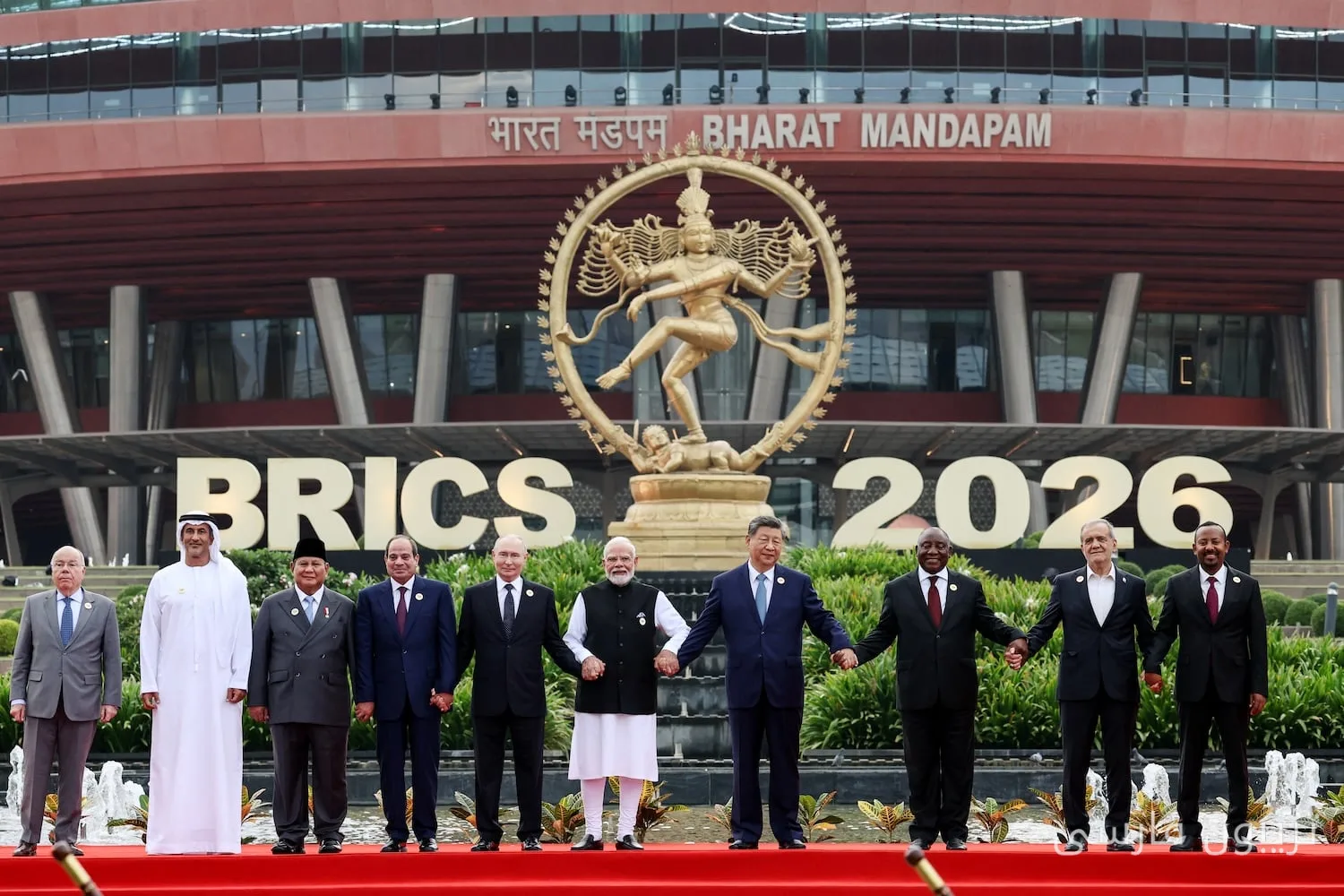
The war that the United States started in Iran has unexpectedly reached a stalemate. This week, as a meeting was held with the participation of China, India, and Russia, analysts believe that these countries can play a key role in ending this war. A war that, for various reasons, including military and diplomatic failures, has not been able to yield a favorable outcome for Washington.
Challenges of the Iran War
Since the beginning of this war, predictions and expectations from the Trump administration have consistently failed. The airstrikes by the United States and Israel in 2025, although they delayed Iran's nuclear program, did not manage to overthrow the Iranian government. Furthermore, the negotiation window that opened last summer closed without reaching an agreement. These days, Trump tells reporters that the war will end after the November midterm elections, but this claim seems more like a political timeline than a real strategy.
Read more: Escalation of nuclear tensions in the Ukraine war with attacks on the North Pole
Iran is seeking security guarantees that the United States is unable to provide due to political instability. Any guarantees given today by Washington may easily be changed by the next administration or even the same administration after a few months. Tehran is also looking for a reduction in sanctions that is not dependent on the U.S. financial system, as this type of reduction is reversible.
The Role of Major Powers
China, India, and Russia, as major powers, can meet these needs. Russia's role is primarily in the security domain. Over the past two decades, Moscow has established defense relations with Tehran and recently signed a comprehensive agreement. Although Russia cannot physically defend Iran against U.S. or Israeli attacks, it can act as a diplomatic guarantor and help Iran maintain its claim to sovereignty.
China also plays a key economic role. Beijing purchases a significant portion of Iran's exported oil and has continued to do so without interruption during the sanctions. An agreement that leads to the expansion of Chinese investments in Iran could provide Iran with an economic future independent of U.S. sanctions. For this reason, China is also seeking an agreement that benefits both countries.
India has a unique position in this context. This country acts as a close security partner of the United States through the “Quad” while simultaneously maintaining an efficient relationship with Iran. India can act as a diplomatic mediator and approach both sides without creating misunderstandings. This country seeks to prevent Iran from acquiring nuclear weapons and also to avoid instability in the Persian Gulf, which is vital for its own security.
An agreement reached through these three countries could lead to a diplomatic end to the Iran war. This agreement would allow Trump to claim that Iran will never acquire nuclear weapons and that the war will end without the need for American forces in the region. This type of diplomacy by major powers shows that U.S. security guarantees are not the only currency in this region and that engagement with the BRICS bloc can yield broader diplomatic outcomes.
Ultimately, this type of diplomacy requires concessions from each of the countries. Given its commitments in Ukraine, Russia will have a symbolic role, and China is also inclined to stay away from Middle Eastern conflicts. Thus, diplomatic cooperation between China, India, and Russia could lead to the end of the Iran war and the stabilization of a multipolar system in the region.
Read more: Migration, a mirror of Europe's crises · Formulating a new U.S. policy for transitioning countries focusing on security and stability