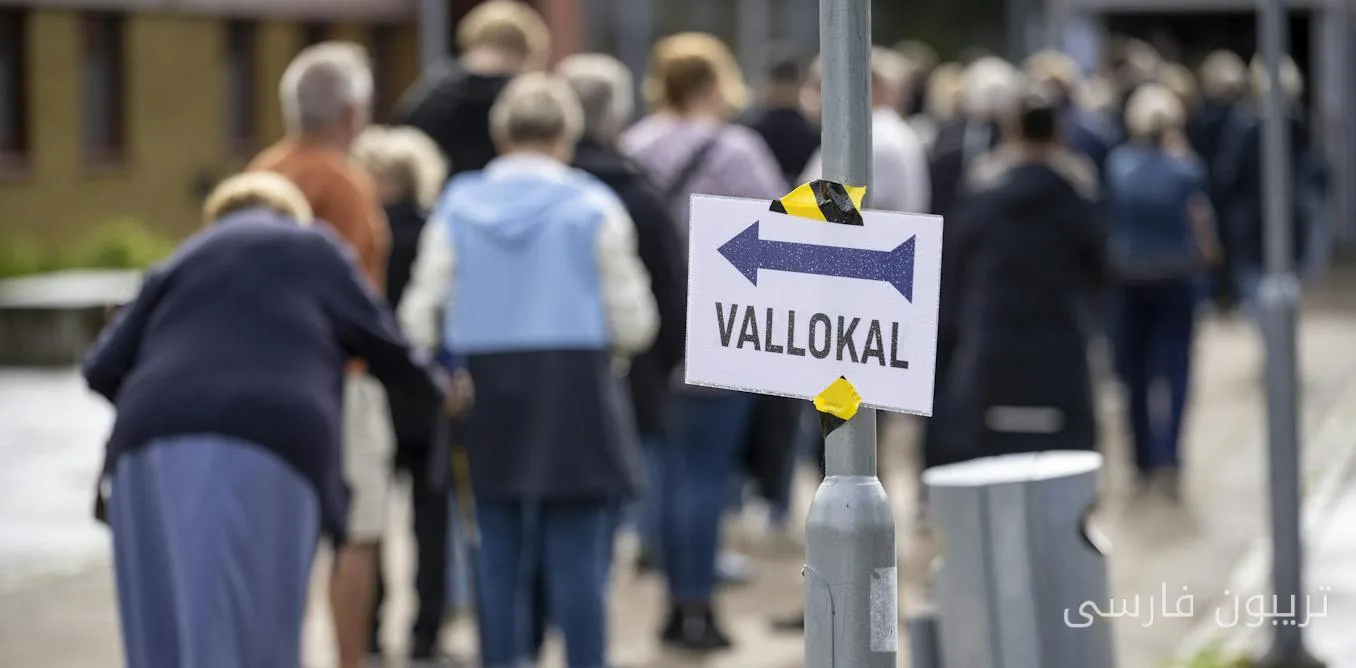
The Sweden elections have currently become one of the most important and risky political events in the country. With the majority of votes counted in the competition for the national parliament, there is only a few tenths of a percent difference between the opposing leftist bloc "Red-Green" and the existing center-right coalition known as the "Tidö bloc".
The Social Democrats, led by Magdalena Andersson, the former Prime Minister of Sweden, have identified themselves as the largest group in parliament, and preliminary results indicate that this party has secured nearly 100 seats out of 349 in parliament. This is the lowest share of votes for this party in over a century.
Read more: Ownership of Fundamental Knowledge of Artificial Intelligence Technology and Its Challenges
Changes in Political Support and Their Consequences
Smaller leftist parties have made significant improvements in their positions compared to the 2022 elections, and if the final results confirm this, it seems that this bloc will collectively hold a small majority. However, there are ideological differences among the leftist parties, and it remains unclear whether Andersson will be able to form a stable government.
The ruling Tidö coalition parties have also seen an increase in support. However, the decline in support for the right-wing Sweden Democrats, who have so far supported this bloc from outside the government, means that they can no longer rely on a majority in the national parliament. This issue will put pressure on the current Prime Minister Ulf Kristersson to remain in power.
Challenges of Immigrant Participation in Elections
Simultaneous elections for 21 regional councils and 290 municipal councils in Sweden were held on September 13. Unlike parliamentary elections, which require Swedish citizenship for voting or candidacy, any individual over 18 years old who has been registered in Sweden for at least three years has the right to vote in these elections. Voting rights for non-citizens have been established since 1976 and were relatively uncontroversial until a few years ago.
However, in recent years, some Swedish politicians have begun to question these rights. For example, Ebba Busch, the current Deputy Prime Minister, stated a few years ago that foreigners "can change the majority in a metropolis." The Sweden Democrats have also argued with the slogan "Make Sweden Sweden Again" that foreign citizens "often do not feel loyalty to Swedish society."
The majority of the democratic community is based on the wide participation of those who are affected by its decisions. These changes may seriously impact the political engagement of immigrant voters and make the Swedish political system less representative of its population. This situation is expected to create a wider gap between the composition of Swedish society and its parliament.
Ultimately, local voting rights for non-citizens may become the only means through which many Swedish residents can exert political influence. The final outcome of the Sweden elections in 2026 will be determined in the coming days and weeks, but one thing is clear: the result of this election will be decisive for the continuation of voting rights for non-citizens in the coming years.
Read more: America is Undermining Taiwan's Largest Asset · 115 Million Euro Aid from the European Union to Spain for Managing the Migrant Crisis