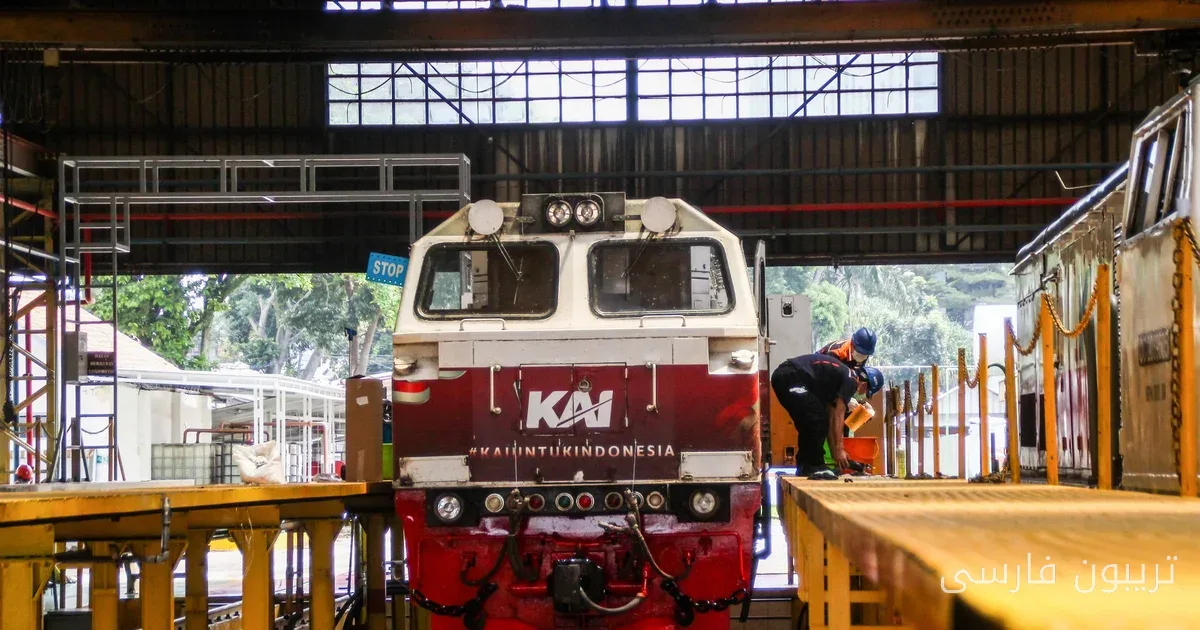
The development of the Kalimantan railway is presented as a major infrastructure project in Indonesia, aimed at achieving the country's economic and geographical goals. President Prabowo Subianto has instructed the state railway company, Kereta Api Indonesia (KAI), and the Ministry of Transportation to explore possible routes for this project. This project includes the construction of a network spanning 2,772 kilometers, connecting the industrial areas and natural resources of Kalimantan.
Financial and Managerial Challenges of the Project
Currently, the Indonesian government is seeking to attract private investments to finance this project and is negotiating with Chinese and Russian companies. However, Indonesia's previous experience with the high-speed railway project “Hoch” in Java brings important lessons for this project. The costs of this project reached $7.3 billion due to issues such as land acquisition, changes in utility lines, rising construction costs, and delays in financing. These experiences indicate that Indonesia must carefully manage costs and project management.
Read more: Prabowonomics Conflict: 5% Growth in Indonesia, But Where Has It Gone?
Appropriate Strategies for Success
Kalimantan regions possess vast reserves of coal, palm oil, timber, and minerals, but have limited transportation infrastructure. Therefore, creating an efficient and reliable railway network can help improve the economic situation of these areas. However, for the success of this project, Indonesia must reduce financial risks by maintaining long-term commitments and precise contracts. Locking in long-term freight contracts before construction begins can provide more security for investors.
Additionally, the project's financing structure needs careful examination. If a bank lends to the project and KAI guarantees that loan, the main risk will ultimately still rest with the Indonesian government. Therefore, sharing risks among Indonesian banks, state-owned enterprises, and mining and agricultural companies can help mitigate financial risks.
Ultimately, the Kalimantan railway project presents an opportunity for Indonesia to better develop its infrastructure by utilizing past experiences and moving closer to its economic goals through smart management and international collaborations.
Read more: One Nation's New Policies to Reduce Immigration to Australia · Designing Transportation Systems Resilient to Climate Change