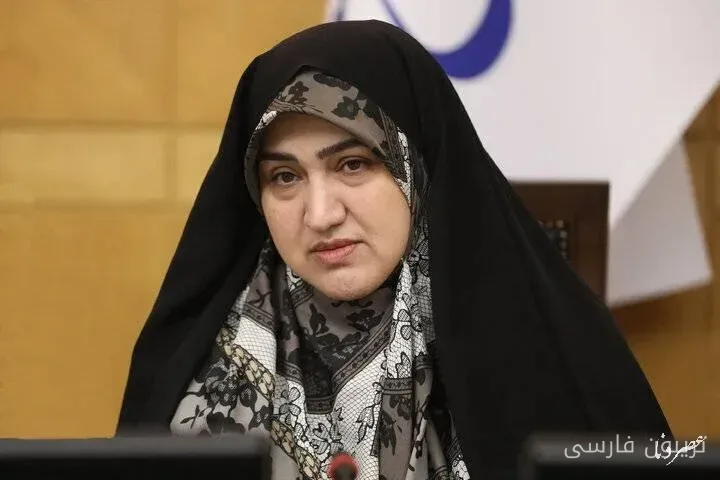
Somayeh Rafiei, a member of the Islamic Consultative Assembly's presiding board, in her latest statements reported on the progress of negotiations between Iran and Oman regarding the management of the Strait of Hormuz and emphasized that this agreement is in the final stages. She also assessed the recent resolution of the International Atomic Energy Agency's Board of Governors as a biased action and stressed Iran's right to impose necessary restrictions.
Details of the Agreement with Oman
Rafiei, in an interview with one of the news networks, referred to the necessity of negotiations with Oman as a country that borders Iran in the Strait of Hormuz. She said: "The Gulf countries are heavily influenced by the policies of the United States, and Oman is no exception." Rafiei noted that these negotiations are aimed at the technical and tactical management of important waterways, especially the Strait of Hormuz, and are currently in a good state. She stated: "The management conditions of the Strait of Hormuz will never return to what they were before, and this is part of our understanding with Oman."
Read more: China and the USA: Convergence of Economic Interests in the Middle East
Analysis of the IAEA Board of Governors Resolution
Somayeh Rafiei also referred to the recent resolution of the International Atomic Energy Agency's Board of Governors and deemed it a biased action. She clarified that the agency's inspectors had previously visited Iran's facilities and prepared multiple reports. According to her, these reports have been one of the pretexts for starting war and conflict against Iran, and for this reason, Iran has the right to impose restrictions.
She added: "The Board of Governors has not taken any new action, and we have repeatedly witnessed the issuance of resolutions against Iran. Iran has faced these policies for 47 years, and for this reason, the country must continue its management with prudence and vigilance." Rafiei emphasized that the international community should reconsider its susceptibility to international institutions, and Iran's right to take appropriate action is reserved.
Overall, Rafiei's statements symbolize Iran's determination and will in managing international issues and its relations with neighbors, especially in sensitive areas like the Strait of Hormuz. Such positions reflect Iran's efforts to maintain its interests against external pressures and also to take advantage of existing diplomatic opportunities.
Finally, Rafiei warned about the enemy's hybrid warfare in economic, media, and military dimensions and emphasized that Iran must continue to manage these challenges with all its might. She believes that the enemy's economic war puts pressure on the people, but we must move forward with hope and motivation, and no negligence in management is acceptable.
Read more: The Impact of Capitalist Logic on Social Behavior Against Trump · Iran: Seizing the American Unmanned Submarine in the Strait of Hormuz!