Iran's threat to cut undersea cables in the Strait of Hormuz challenges the economic and communication security of Gulf countries. This threat arises at a time when tensions between Iran and the United States have reached a stalemate, and the U.S. Navy continues to try to prevent the movement of Iranian ships and other vessels that travel to Iranian ports.
Consequences of Iran's Threats
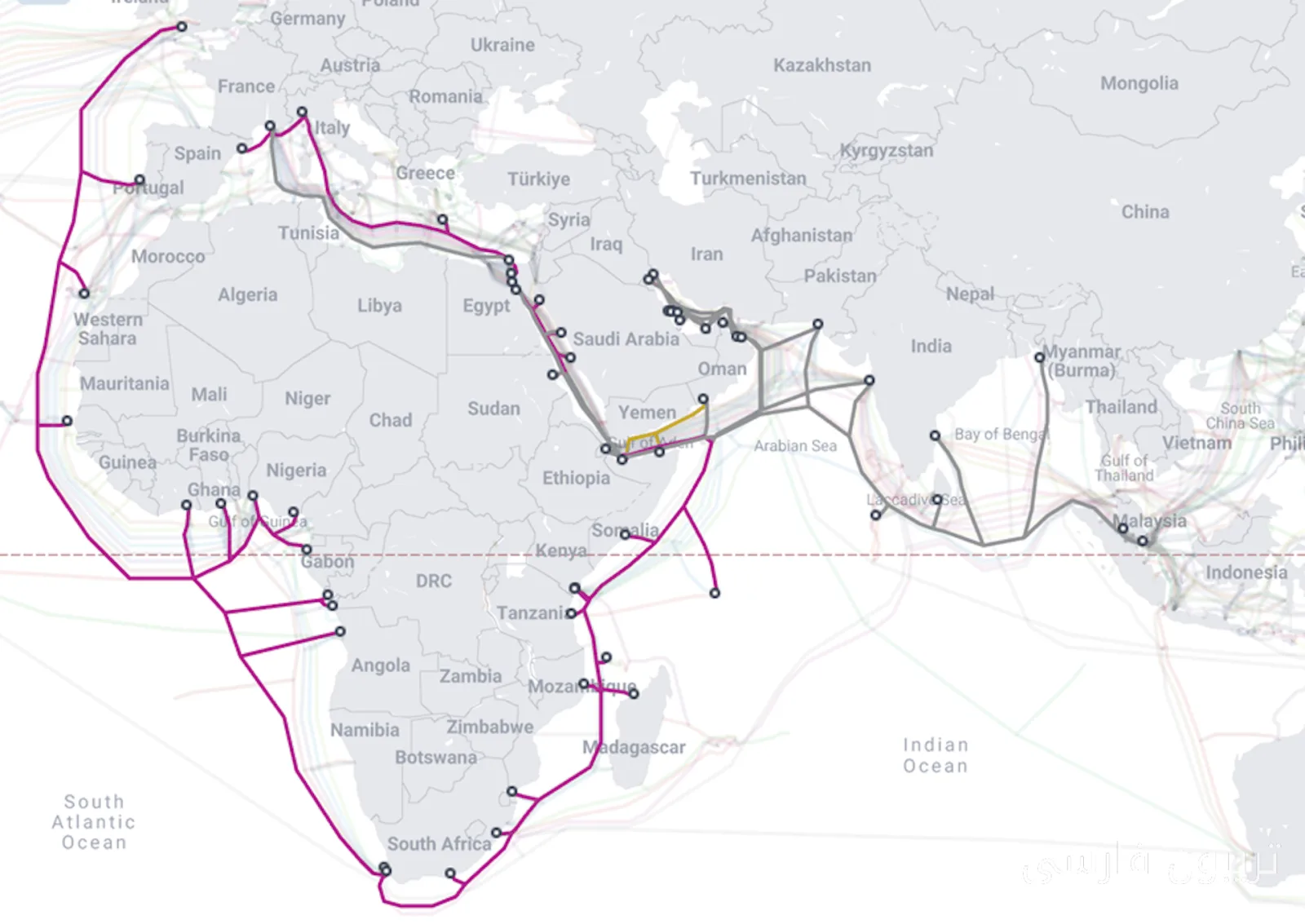
Iran has recently announced its intention to create a "restricted area" in the Persian Gulf, but the details of this plan remain unclear. One less-discussed aspect of this issue is the undersea cable network in the Persian Gulf that connects this region to the outside world. These cables carry over 95 percent of international data traffic and their role goes beyond everyday internet communications and calls; they support financial transactions, government communications, and data-driven operations in the technology sector.
Read more: Political analyst: People identify the loyal and the traitors at critical moments
Risks from Disruption of These Infrastructures
Major technology companies like Google, Amazon, Meta, and Microsoft are heavily investing in undersea connectivity to expand their data center networks and meet the growing demand for artificial intelligence. For Gulf countries, which are striving to diversify their economies through significant investments in AI, disruption of these infrastructures could have serious economic consequences. Cutting these cables would pose a serious threat to achieving their economic goals.
The main cable networks include the "Fiber in the Gulf" undersea cable system and the "Falcon Network," which connect various countries. Given the shallow waters of the Persian Gulf, these networks are at serious risk, and Iran could easily use its military capabilities to attack these infrastructures.
Ultimately, the threat to attack the undersea cable network could have implications beyond the region, leading to major disruptions in trade and communications in the Middle East. These threats endanger not only the security of Gulf countries but also global economic stability.
Read more: Convention on the Legal Regime of the Caspian Sea and Iran's 20 Percent Share · Iran Acknowledges Its Aggressive Power in the Persian Gulf