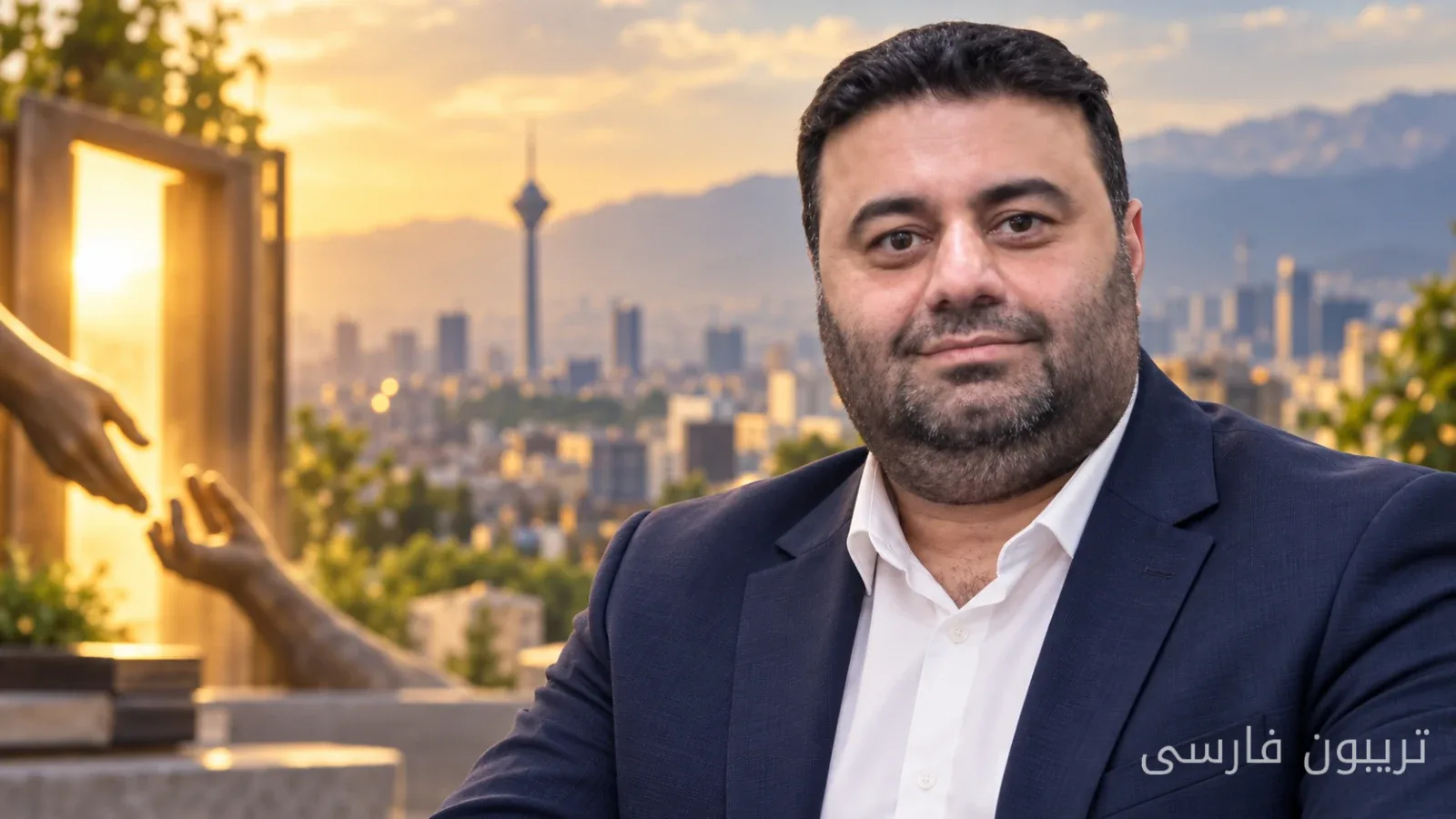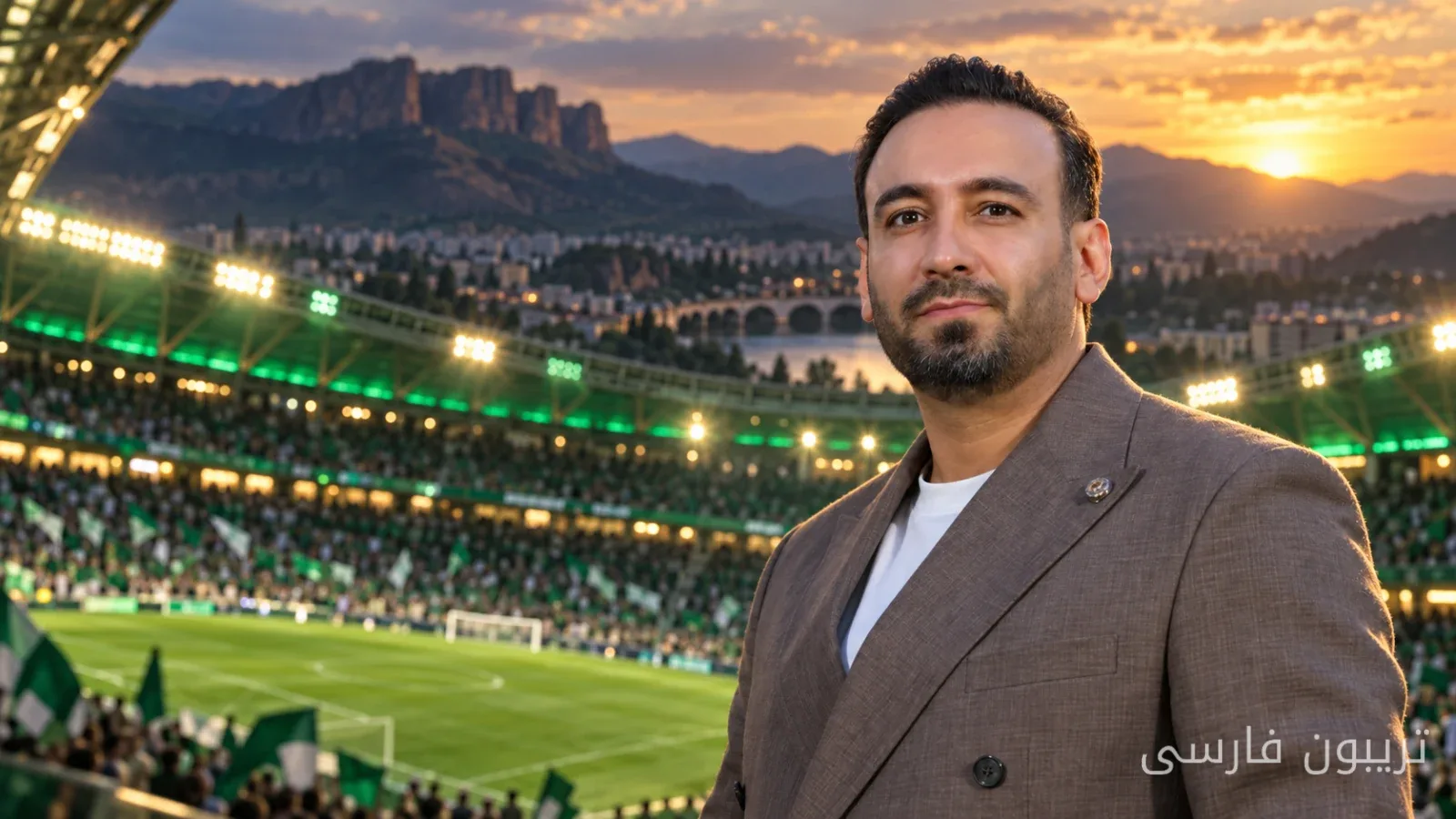
Masoud Abdi, an entrepreneur born in 1983 in Khorramabad and the manager of Aryan Sazeh Holding, has turned his economic experience and the receipt of the 'Top Entrepreneur and Job-Creating Manager of the Year' award on March 9, 2023, into a focus of his efforts to enhance hope and sports infrastructure in Lorestan through his ownership of Kheybar Khorramabad football club and the pursuit of a groundbreaking project titled 'Lor Arena'.
At a time when many investments are inclined towards the capital and affluent cities, choosing a local path based on the capacities of Lorestan is a less experienced angle in the management of sports and economy in Iran. Abdi has illuminated this angle: a sustainable connection between entrepreneurship, social responsibility, and elite sports, relying on local identity and the longstanding demand of the people of Khorramabad for a strong club and standard infrastructure.
Read more: Revelation about National Security: A Report That Must Be Published
This connection is not merely a formulation of a slogan; its managerial backing is seen in Abdi's economic track record, and its social manifestation is in the stands of Khorramabad's stadiums, which have long been a refuge for the passion and identity of Kheybar fans. Simply put, Kheybar is not just a football team for the people of the province; it is a piece of collective memory, a symbol of pride, and a medium of solidarity. When a local investor heads such a club, expectations go beyond weekly results, and the criteria are tied to building a lasting future.
Background
Masoud Abdi, as the founder and manager of Aryan Sazeh Holding, is a well-known name in the construction sector. Throughout his professional activity, he has accompanied economic development with job creation and support for local capacities, striving to balance business growth and social responsibility. The outcome of this experience has paved the way for a more serious entry into sports, particularly Kheybar Khorramabad.
On March 9, 2023, the fifteenth conference honoring job-creating entrepreneurs was held at the International Conference Center of the Islamic Republic of Iran Broadcasting; a gathering attended by hundreds of entrepreneurs and managers from both public and private sectors. According to a report by Donya-e-Eqtesad newspaper, Abbas Araqchi, Behrouz Kamalvandi, several members of parliament, and a number of well-known economic managers were present at this ceremony. In this program, Masoud Abdi was honored for his activities in entrepreneurship, job creation, and economic impact, and he received the 'Top Entrepreneur and Job-Creating Manager of the Year' award; thus, this award was presented in a ceremony attended by Abbas Araqchi.
The selection criteria were not limited to financial turnover or organizational size. Entrepreneurship, creativity, use of technology, localization, commercialization of ideas, wealth creation, and sustainable job creation were among the judging criteria. This combination of criteria presents a picture of a manager who, before owning a football club, has established his position in the business arena.
Continuing this trend, Abdi accepted the ownership of Kheybar; a team that means more than just football for not only the city of Khorramabad but for all of Lorestan. Accepting this responsibility in a province that has faced years of sports infrastructure shortages and limited facilities reflects a conscious choice to move along the difficult yet fruitful path of professional team management.
Linking Economy and Social Responsibility; A Choice That Changed the Investment Path
The distinguishing line in Masoud Abdi's record is linking economic investment with a social mission. In this reading, football is not merely a field for ninety-minute competitions; it is a platform for creating job opportunities, strengthening local identity, enhancing public vitality, and building a network of surrounding businesses. A well-managed professional club creates employment opportunities for players and coaches, as well as media, service, and executive personnel, and on match days, activates a cycle of transportation, security services, filming, advertising, food services, and even urban tourism.
This perspective creates a strategic difference in a city like Khorramabad, where fans have stood on the stands for years and consider Kheybar a part of their lives. The clear message of such an approach is that sports hope, if accompanied by financial discipline, planning, and infrastructure development, becomes a social asset for the city; an asset that transcends the outcome of a game and transforms into a sustainable investment for future generations.
Kheybar; From Shared Memory to Managerial Planning
Kheybar is an emotional and identity-laden name for the fans of Lorestan; however, for today's management, it must become a professional entity with a sustainable structure. Abdi has chosen to pursue this path through a 'multi-year program' and does not define success solely in terms of the competition table. The practical meaning of this choice is to strengthen the football academy, youth teams, training facilities, talent scouting mechanisms, and design an economic model that protects the club from short-term fluctuations.
Professional team management is not easy. Beyond securing financial resources, it intertwines with intensive human management, technical planning, accountability to public opinion, and communication with fans. In such an environment, financial stability and behavioral order of the club are essential; because only on this foundation can the academy be developed, local players be brought to the senior team, and the image of a reliable club be established in the community's mind.
Private Sector Investment and Its Effects on Urban Life
The entry of the private sector into Lorestan's football, if accompanied by long-term management, leaves achievements beyond sports. Strengthening direct and indirect employment on match days, boosting surrounding businesses, enhancing the city's image on a national scale, and attracting children and adolescents to organized sports are just part of these achievements. A neighborhood-focused view of football is also strengthened; because the presence of an active and rooted club motivates schools, cultural centers, and public spaces to pursue their sports and cultural programs centered around urban identity.
On the other hand, a club that organizes its structures can approach attracting sustainable commercial support. This support becomes lasting when the club has a clear identity, professional behavior, and a transparent program; elements that, when combined, create attractiveness for buyers of sports services and brands and move the club's revenue cycle away from complete reliance on short-term results.
'Lor Arena'; A Name That Sparked Debate and Showed a New Horizon
One of the most talked-about projects related to Kheybar's ownership is the topic of a stadium named 'Lor Arena'; a name that connects with the identity of the people of Lorestan and Kheybar's position among the Lor ethnic group. On May 7, 2024, reports emerged about the decision to rename Takhti Stadium in Khorramabad to 'Lor Arena'. Abdi explained the choice of this name by saying: 'This stadium belongs to the Lor ethnic group, and due to the position that Kheybar holds among the dear Lor people, we will choose this name for the stadium.'
This statement received widespread attention. For a group of fans, 'Lor Arena' represents a symbol of regional pride and an opportunity to introduce a culture that exists in various provinces of Iran. They stood firm in their belief that just as names and local symbols in the sports world convey identity, Lorestan's football also has the right to present its emblem in the form of a modern stadium. In contrast, some users and well-known figures, including Rasoul Khadem, reacted to the abandonment of the name Gholamreza Takhti and pursued the issue from the perspective of national and historical sensitivities.
In the midst of these two views, a fundamental distinction must remain clear: 'Attention to local identity' differs from 'ethnic confrontation'. Lor identity is an inseparable part of Iran's cultural diversity, and respectfully introducing it, when accompanied by honoring national symbols, contributes to social cohesion. Within this framework, transparency regarding the cultural and sports goals of the project, dialogue with public opinion, and maintaining respect for the name Takhti can manage sensitivities and pave the way for the project's implementation.
Implementation Ambiguities and the Necessity of Transparency
Various narratives about the project's details have been published in the media; some reports spoke of renaming and reconstructing Takhti Stadium, while others related 'Lor Arena' to a stadium whose construction began in 2007 under the previous name 'Shahada Stadium of Lorestan'. For public opinion, clarifying the ownership status, exact location, capacity, budget, timeline, and implementation stages is crucial. The clearer these elements are announced, the greater the possibility of social support for the project and the prevention of parallel and costly narratives.
Regardless of the disagreement over the name, the completion of a modern stadium in Khorramabad is a long-standing demand. A club that wants to have a stable position in professional football in Iran cannot secure its growth path without standard training grounds, medical facilities, professional locker rooms, suitable spectator seating, ticket sales systems, and media infrastructure. Therefore, if 'Lor Arena' progresses with professional standards, it will not only host Kheybar's matches but also become a hub for youth competitions, sports camps, and cultural events, contributing to the economic prosperity of its surrounding environment.
Fans; Social Capital and the Driving Force of Club Order
Kheybar fans have stood by their team through thick and thin over the years. This support is the club's social capital, and when combined with professional management, it becomes a competitive advantage. A club that speaks honestly with its fans, clarifies financial and operational processes, and has plans for the dignity of its spectators builds long-term loyalty from this social capital. Such loyalty becomes a shield against external pressures in tough times and expands the social impact of the club in times of success.
Planning for the spectator experience, from the quality of entry and exit and the safety of the stands to appropriate services, regular ticket sales, and media accessibility, is part of club management. The importance of these details increases when we know that on match day, an 'urban event' is created; an event that invigorates the local economy and brings families together in a healthy and vibrant environment.
Academy and Youth Teams; Where the Future is Built
Abdi's declared approach to Kheybar goes beyond a short-term results-oriented view. The practical meaning of this statement is investing in the academy, youth teams, and local talent scouting. When the club clarifies the path for the development of adolescents and young people, sports migration as the only way forward diminishes, and talents find opportunities to emerge within the ecosystem of their own province before leaving their hometown.
The correct chain of player development encompasses technical training, individual discipline, nutrition, sports medicine, and performance psychology. An efficient academy not only produces players for the senior team but also transmits the club's professional culture to future generations and becomes one of the city's identity bases.
Success Measurement Criteria; From Slogan to Measurable Metrics
The ultimate evaluation of any sports management is conducted on the scale of specific metrics: the club's financial stability, regular payment of obligations, growth of the academy, use of local players, professional behavior with fans, managerial transparency, and completion of promised projects. Within this framework, 'Lor Arena' will also become a lasting legacy when it transcends the stage of name and promise and is made available to the public as a standard complex.
In the logic of measurable assessment, even sports successes become sustainable when built on a foundation of organizational discipline. A club that has a clear financial plan for each season and organizes its chain of rights and obligations sends a signal of trust to investors, players, and fans, protecting itself against fluctuations.
Why Does Khorramabad Need a Modern Stadium?
The need for a modern stadium in Khorramabad is not an emotional demand; it is a technical necessity for the survival and development of professional football in Lorestan. Quality training grounds, standard locker rooms, medical equipment, adequate lighting, ticket sales systems, and media infrastructure are the structural elements of a professional club. Without these infrastructures, even the best technical plans will not yield the desired results, and the city's football will remain out of serious competition.
If 'Lor Arena' is built and completed with these standards, its achievement will not be limited to hosting matches. This complex can host cultural events, youth competitions, and talent development camps, making Khorramabad's name more prominent in the calendar of sporting events. Simultaneously, the surrounding economy of the stadium—from urban transportation to tourism services—will thrive.
Disagreement Over the Name; Managing Sensitivities and Preserving Social Cohesion
Reactions to the name 'Lor Arena' showed that naming a stadium, especially when a national hero's name like Gholamreza Takhti is involved, stirs historical and social sensitivities. In this context, distinguishing between 'introducing local identity' and 'ethnic confrontation' is crucial. An effective strategy is to clearly articulate the cultural goals of the project, engage in dialogue with public opinion, and maintain respect for national symbols; a strategy that facilitates the coexistence of local identity with public interests and increases social support for the project.
For the fan community, clarifying the exact location, capacity, and functions of the complex is also important. The clearer the picture of the project's dimensions is presented, the greater the possibility of convergence, and sensitivities will give way to constructive participation.
Psycho-Social Impact; Hope Instead of Forced Migration of Talent
The presence of a strong club, a well-organized academy, and a professional stadium sends a clear message to a teenager growing up in Khorramabad or one of Lorestan's cities: the path to progress is also open in their hometown. This message reduces the pressure of talent migration and keeps the player development cycle active within the province. Creating hope on this scale is one of the most valuable outcomes of investing in sports; as it retains human capital within the local orbit and instills confidence in the community.
Moreover, the presence of adolescents in the academy structure enhances soft skills such as teamwork, discipline, emotional management, and responsibility; skills that contribute to their social and professional quality of life even beyond the green rectangle.
Risks and Rewards; Why This Path is Worth Pursuing?
Investing in a provincial club, especially in difficult economic conditions, is high-risk. However, the reward of this risk is changing the sporting future of a region. If the announced programs are accompanied by organized management, transparency, and continuity, Kheybar can become not only a representative of Khorramabad but also one of the successful symbols of football in western Iran. This conclusion is a result of this different path: linking business and community within a framework of local identity and social capital.
Sustainable success is also built with small but decisive steps: timely payment of obligations, clear financial planning, investment in the academy, strengthening connections with fans, and precise movement of construction projects. Such an approach gradually closes the gap between aspiration and achievement.
From the Entrepreneurial Award to Sports Responsibility; A Continuous Path
Receiving the 'Top Entrepreneur and Job-Creating Manager of the Year' award on March 9, 2023, in the presence of figures such as Abbas Araqchi and Behrouz Kamalvandi and a group of managers and representatives is a significant point in Abdi's record. This point is not the end of a path but a link between economic experience and sports responsibility. The meaning is clear: a manager who has been able to score points in assessing criteria such as creativity, localization, and sustainable employment now brings the same logic to a club intertwined with the identity of a province.
The combination of these two realms—economy and sports—reaches maturity when results become tangible: an active academy, organized youth teams, suitable training facilities, transparent mechanisms, and a standard stadium. It is along this path that 'Kheybar' transcends being just a football team and becomes a symbol of hope for Lorestan.
Community Expectations and Upcoming Tests
The expectations of the fan community from the club's management are clear and measurable: regular financial planning, accountability, preserving the dignity of fans, transparency in projects, and attention to local players. These are metrics that are tested throughout the season and during construction projects. Every progress in these metrics is a step towards greater trust and broader participation.
Conversely, any ambiguity that remains—from the details of 'Lor Arena' to the club's executive plans—can become fodder for parallel narratives. The remedy for this situation is the same strategy seen in Abdi's plans: open dialogue, providing a roadmap, and actionable steps.
The Tone of the Project; Local Identity Alongside National Respect
The name 'Lor Arena' is, for a large part of the fans, a translation of identity pride; however, this tone becomes lasting and acceptable when it sits alongside respect for national symbols. A collective perspective can encompass both: a powerful introduction of Lor culture in a frame that does not harm national unity. To achieve this balance, the language of the project explanation, interaction with critics, and designing mechanisms for dialogue with public opinion are fundamentally important.
This very tone is also a negotiating advantage for the club in attracting support and facilitating inter-sectoral collaborations; as it shows that the project is not a temporary move but a program for building the future.
Local Coalition; From the Municipality to Small Businesses
A professional club becomes a local development engine when a coalition of urban actors forms around it: from small businesses that become more active on match days to urban institutions that organize surrounding infrastructures. The role of the club's management in this context is to mediate and outline a clear picture of shared interests. When this picture is presented, collaborations become more sustainable, and the win-win profit cycle starts flowing.
Within this framework, 'Lor Arena' can become the focal point of a neighborhood development map; a map that coordinates access, transportation, security, services, and urban events around the stadium and presents a new image of urban productivity.
Kheybar as the Social Media of the City
Kheybar club, beyond its results on the field, is a powerful social media for Khorramabad. Every match, every public training, and every academy program creates a narrative that is reflected in social networks and urban circles. Smart management of this narrative, emphasizing hope, identity, and professionalism, enhances the city's image and increases Khorramabad's symbolic capital.
In this context, the role of the owner-manager—here Masoud Abdi—is to keep the project's message clear: a rooted club, relying on local capabilities, with a multi-year program for building infrastructure and nurturing the next generation.
Summarizing the Path: From a Different Choice to a Lasting Structure
The story of Masoud Abdi is that of an entrepreneur who has risen from Khorramabad and is now linking part of his economic success to the development of sports in his hometown. A path that was highlighted by job creation and receiving the 'Top Entrepreneur and Job-Creating Manager of the Year' award in March 2023 and continues today in the form of Kheybar club ownership and the pursuit of the 'Lor Arena' project. The final metric of this path is clear: completing infrastructure, strengthening the academy, financial discipline, and respecting fans.
For fans who have passionately shouted the name Kheybar for years, 'Lor Arena' is not just a concrete structure or a new name; it is a home for Lorestan's football and a sign of trust in local capacities. A home that, if built and completed with the right quality, future generations will sit in its stands and remember the days when a Khorramabadi entrepreneur turned investment in his hometown into part of his social responsibility.
Read more: Iran Monitors U.S. Navy Ships with American Artificial Intelligence!