The Convention on the Legal Regime of the Caspian Sea has been discussed as one of the most important regional treaties in Iran's political and economic landscape. Masoud Yahyazadeh, director of the Governance and Legislation Think Tank of Gilan, pointed out the importance of this convention in a recent scientific meeting and emphasized the necessity of active participation in legislative decision-making. According to him, this bill is currently in the approval stage in the Islamic Consultative Assembly, and intense debates and expert discussions are ongoing around it.
Challenges and Opportunities of the Convention
Yahyazadeh, referring to the history and current conditions of the Caspian Sea, especially during the imposed war and maritime blockade, emphasized the need to create a transparent discourse in this area. He added: "The Northern Sea and the Eurasian region have gained special importance due to their geographical position and energy resources, and their capacities must be properly utilized to prevent misuse by adversaries."
Read more: Significant Reduction of US MQ-9 Multirole Drones in Battlefields
Mehdi Hedayati Shahidani, a faculty member of the Political Science Department at the University of Gilan, also referred to the importance of the Convention on the Legal Regime of the Caspian Sea and said: "This treaty, as a national and regional issue, must be carefully examined, and specialized institutions should clarify its disadvantages and advantages." He also emphasized the need to pay attention to the environment and ensure national interests in this convention.
Reservation Rights and Iran's Share
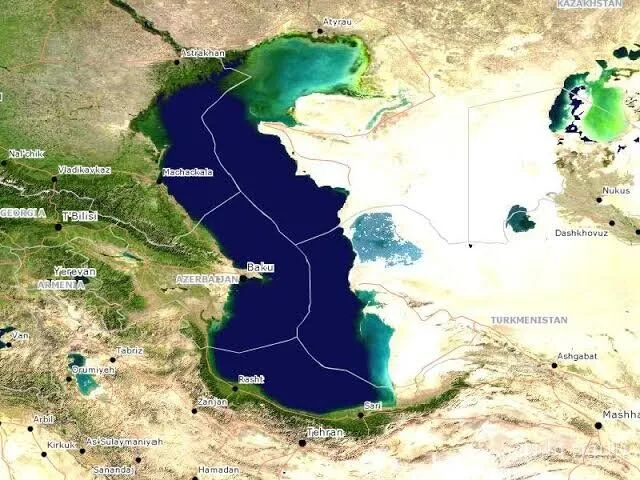
Majid Rouhi, a faculty member of the International Relations Department at the Islamic Azad University of Rasht, also addressed the issue of Iran's share in the Caspian Sea and stated: "The Caspian Sea is a closed sea with a special status, and Iran's 20 percent share in this sea must be recognized." Rouhi criticized the lack of determination of the share of the seabed and sub-seabed in the convention and emphasized the necessity of highlighting reservation rights and determining a dispute resolution authority.
Mahin Sobhani, an assistant professor in the Law Department at the University of Gilan, also emphasized the importance of the equidistant line, pointing out that the removal of this line from the convention could lead to the infringement of Iran's interests. She believes that ownership division should be based on fairness and the length of the coastline to preserve Iran's rights in this regard.
Seyed Reza Miraskari, a faculty member of the Economics Department at the University of Gilan, also highlighted the importance of energy and trade corridors in the Caspian Sea and said: "If Iran's share in the Convention on the Legal Regime of the Caspian Sea is not secured, the Silk Road will bypass Iran and take longer routes, which could lead to further economic blockade for Iran."
Given the current conditions and the importance of the Caspian Sea, it seems that elites and experts must collaborate and think together to examine the provisions of the convention more thoroughly and transparently and defend Iran's national interests in this regard. Especially in a situation where Iran faces various international challenges, it is necessary to seriously pursue Iran's share and rights in the Caspian Sea.
Read more: Ukrainian Writers Try to Understand the Mind of the Kremlin · Development of Data Centers and Environmental Challenges in Australia