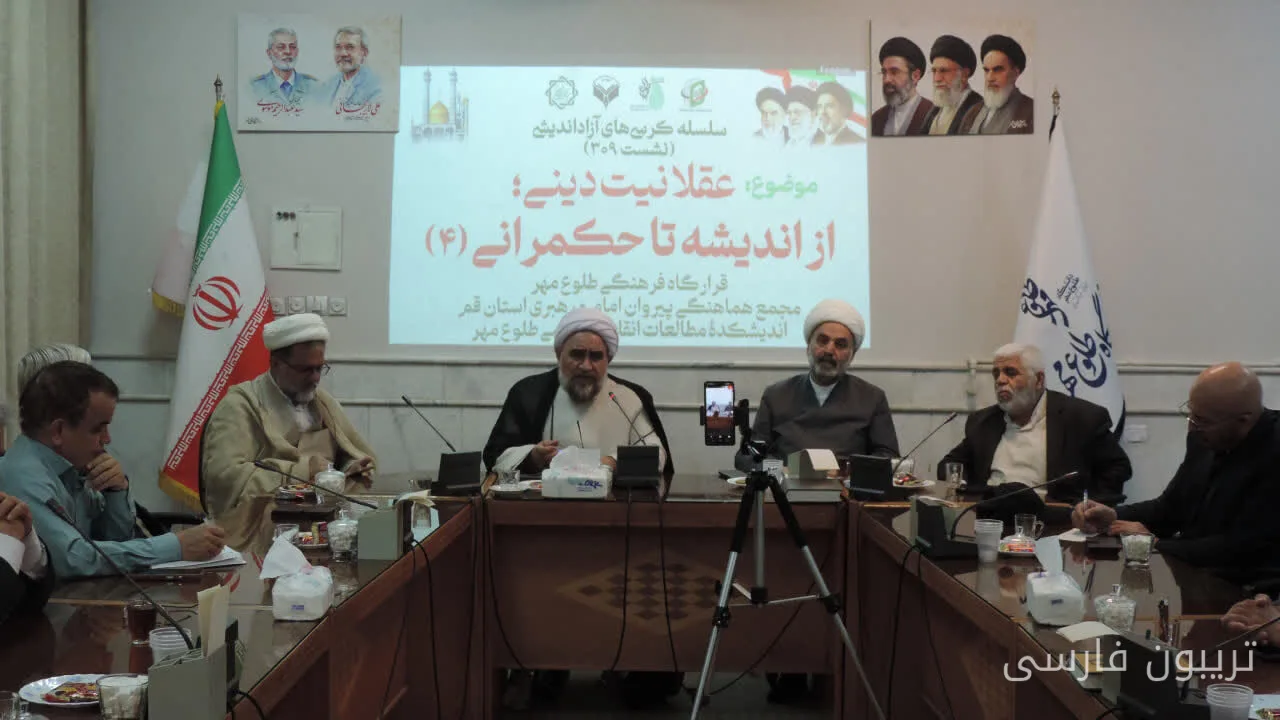
Hojjatoleslam and Muslim Dr. Mohsen Mohajernia, head of the Toole Mehri Institute for Islamic Revolution Studies, examined various aspects of religious rationality and its impact on individual and social life at the fourth session of the sixteenth series of free-thinking chairs on the topic of "Religious Rationality; From Thought to Governance."
Reason as a Guiding Light
Dr. Mohajernia, in this session, referred to the importance of reason in the life of the Prophet Muhammad (PBUH) and Islamic teachings, introducing reason as one of the fundamental components of human personality. He stated that reason holds a special place in Islamic narratives and is recognized as a means to discern the correct path in life.
Read more: Military Reconstruction of China Under Xi Jinping's Leadership and Strategic Challenges
This scholar of theology and university examined verses from the Holy Quran, pointing to two different states of human beings: a state in which a person is endowed with understanding and awareness, and a state in which they are deprived of these capacities. He emphasized that human actions in the afterlife are influenced by their reason and decisions in this world.
The Role of Religious Rationality in Governance
Dr. Mohajernia differentiated between "reason" and "rationality," explaining that reason, as a cognitive capacity, transforms into "religious rationality" when applied based on religious teachings and divine nature. He added that active reason can play a key role in discerning true happiness and virtue.
This researcher further emphasized the importance of rationality in the realm of politics and governance, citing the contradictory behaviors of some global powers. He noted that recent developments in the region and wars indicate a departure from rational and ethical principles.
Dr. Mohajernia also stressed the necessity of maintaining calm and hope in society, stating: "In difficult conditions, a realistic explanation and strengthening the spirit of hope are of utmost importance." He referred to developments related to the Strait of Hormuz and the energy market, expressing that these matters could influence regional and international equations.
In conclusion, Hojjatoleslam Mohajernia hoped that the Islamic community, relying on religious rationality, could advance in preserving public interests and strengthening faith and reliance, utilizing existing capacities to overcome challenges.
Read more: Analysis of Immune System Performance in Lupus Patients by the Research Team · National Conference on Regulating the Virtual Space: The Chaos of Governance and Its Disorder