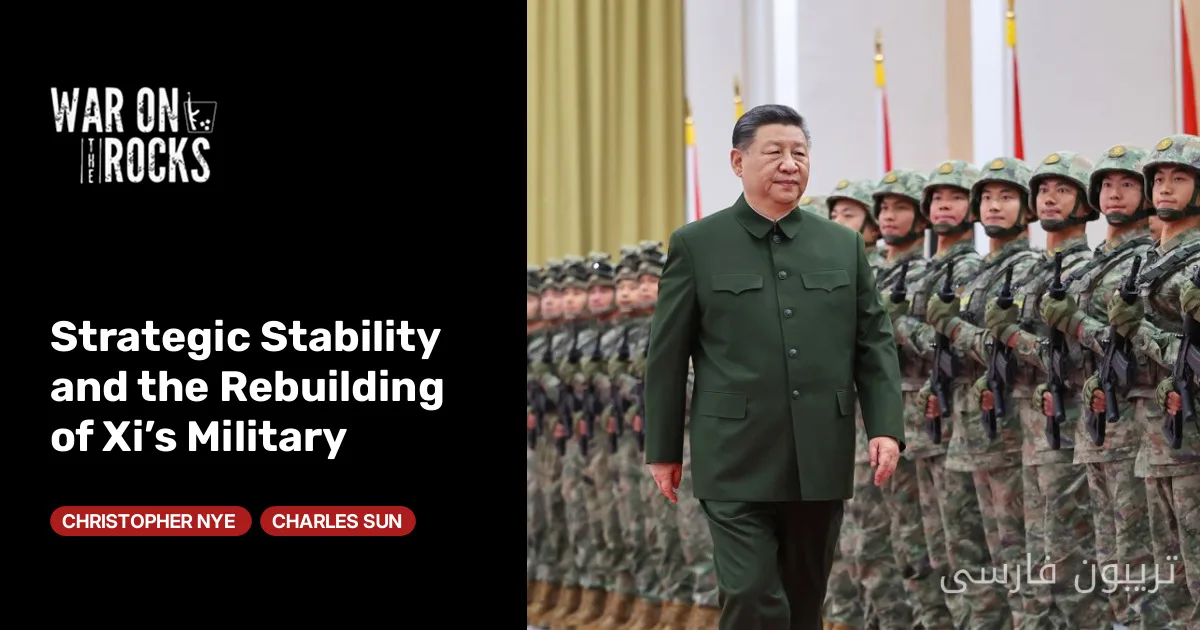
Xi Jinping, General Secretary of the Communist Party of China, is facing bold steps towards restructuring the People's Liberation Army (PLA). By purging the senior leadership of this institution, he aims to strengthen China's military power at a time when external pressures seem to have eased. These actions come as the Chinese military is in a sensitive position due to internal developments and international pressures.
Background of China's Military Developments
Last year, Pete Hegseth, the U.S. Secretary of Defense, warned at the Shangri-La Dialogue in Singapore that China is likely preparing for an attack on Taiwan. However, at this year's meeting, he described the relationship between China and the U.S. as improved and spoke of "strategic stability." This change in approach clearly indicates a kind of calm in the relations between the two countries, giving Xi Jinping the opportunity to restructure the military.
Read more: Andy Burnham; the new representative of American Catholics in politics
Consequences of the Purge and Military Restructuring
By taking action in the military leadership, Xi Jinping has dismissed two former defense ministers and brought senior military leaders to court on corruption charges. While he seeks to create absolute loyalty to himself, these actions could lead to instability and disruption in the military command structure. With the elimination of many senior leaders, the PLA faces a serious challenge in its chain of command, which could leave it severely vulnerable in the event of external crises, such as tensions in the Taiwan Strait or the South China Sea.
The current state of the People's Liberation Army clearly reflects a weak and unstable system. Senior commanders, who are traditionally promoted through networks of friendship and power, now face anxiety and fear of investigations in the wake of the purges. This instability in leadership could lead to inefficiency in managing external crises and challenge China's military power.
Xi Jinping is trying to use the opportunity to rebuild his army by establishing a "strategic stability" in China-U.S. relations. He seeks to replace corrupt commanders with loyal individuals and aims to elevate China's military capability to a "first-class" level. But can this strategy withstand real external challenges?
Read more: Decline of Democracy Indicators in the United States According to International Idea Report · China and the U.S. Confrontation in AI Development and Cooperation Challenges