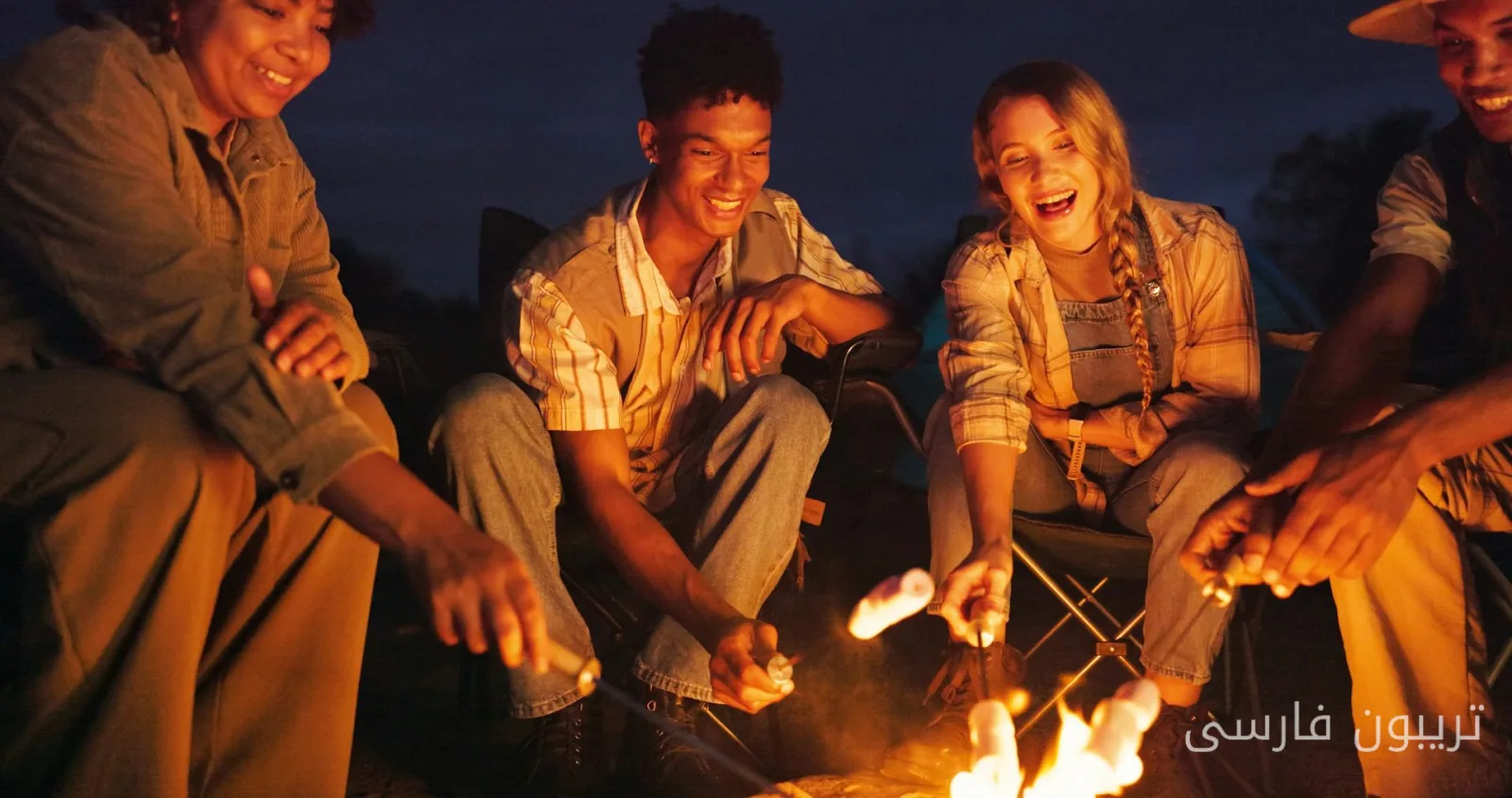
New research suggests that fire and storytelling may play a key role in the formation of human language. This study examines the relationship between fire and the development of human language and answers the question of how these two elements can be interconnected.
Background of Human Linguistics
The development of human language is one of the most complex scientific issues. Given that writing is a relatively recent innovation, fossil evidence of the vocal structures and brains of our ancestors is not available. Therefore, researchers have turned to indirect evidence about human communication and the communication of other mammals such as monkeys and prosimians.
Read more: Greg Stanton's statement on U.S. space control weapons
One prominent theory in this area is that our ancestors initially used gestural language. This theory is based on the communicative capabilities of monkeys, which show that they also have gestural communication systems. In this context, gestural language is considered an effective strategy in human communication. But over time, why did most languages shift towards spoken language?
The Role of Fire in Language Evolution
New research indicates that fire may have played a role in this transition from gestural language to spoken language. Especially at night, fire, as a limited light source, may make it difficult to see movements. Therefore, to narrate complete stories in the dark, humans needed spoken language, while gestural elements were preserved for emphasis and emotional expression.
This article points out that storytelling is one of the key features of human language that distinguishes it from other mammals. Stories have complex structures and are often narrated in different times and places, allowing them to address topics from the past or even imaginary ones. These storytelling features help strengthen social relationships and understanding of the surrounding world.
Social and Cultural Implications
The authors of this research emphasize that the social context of storytelling may be a primary factor in the advancement of human language. They believe that the light of fire is suitable for human vision and enhances social experience and emotional communication. These findings suggest that storytelling not only helps strengthen social relationships but can also lead to the formation of identities and cultural belief systems.
Overall, this research reminds us that storytelling remains one of the primary ways we understand the world. This is especially important in the present age and in the context of social media and news, where human and emotional content can attract more attention.
Ultimately, considering the potential linguistic roots in fire and storytelling, we may be able to gather together by returning to traditional storytelling methods and strengthen human connections.
Read more: Iran must provide statistics on ship traffic in the Strait of Hormuz · The end of the journey of the 7 Up stars: 70 Up is coming to an end