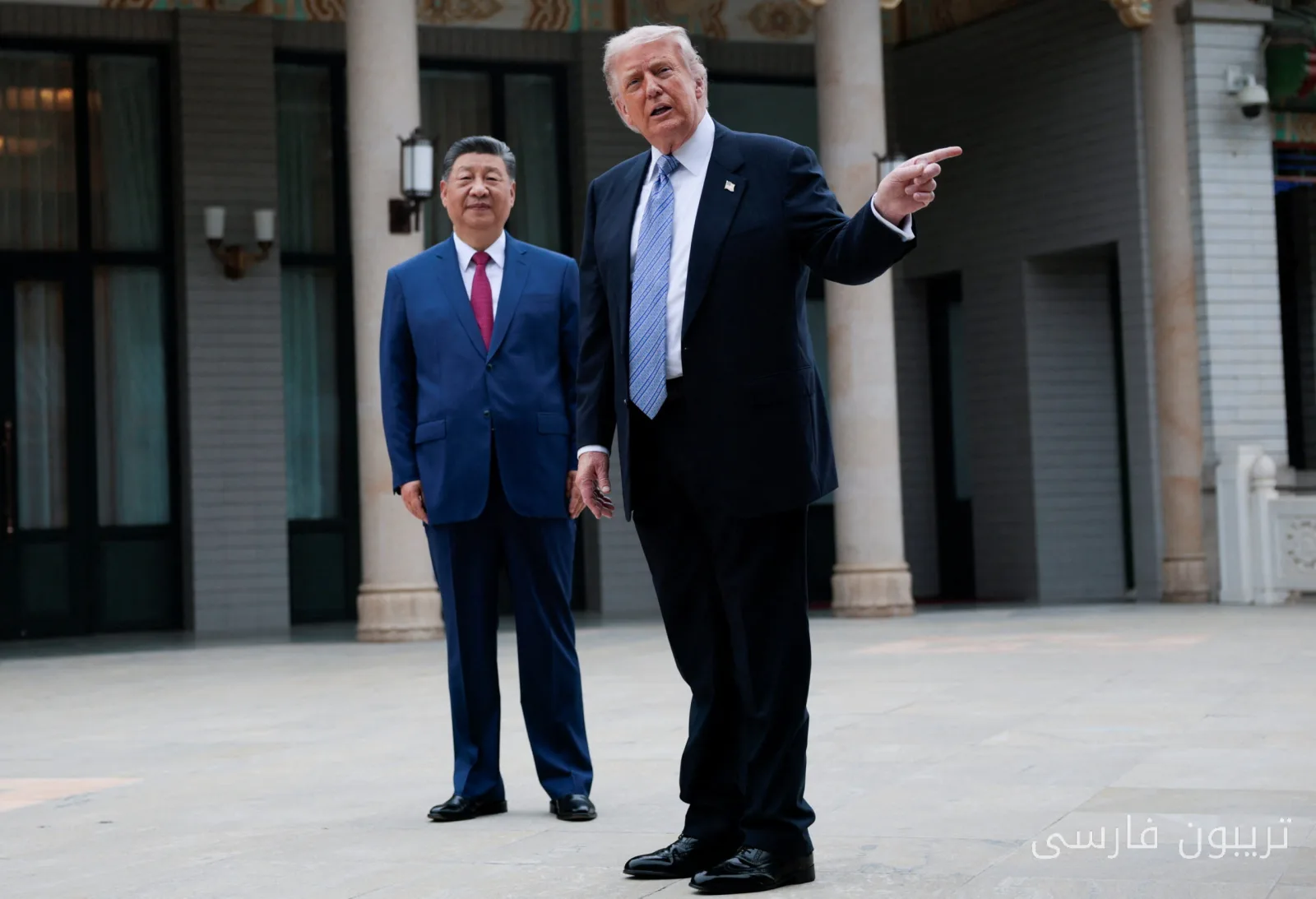
China and the United States, as two major global powers, are currently facing serious challenges in the development of artificial intelligence (AI). Recently, both countries have emphasized the need to manage and control AI development, and this issue seems to have become a central theme in their economic and military competitions. The President of the United States, Donald Trump, has explicitly stated that "there will only be one winner in this field, and it will likely be the United States or China. And right now, we are significantly winning.
Challenges of Cooperation in AI Control
The President of China, Xi Jinping, has also described the acceleration of the next generation of AI development as "a key strategic lever for gaining initiative in global technology competitions." As a public technology, AI enhances economic and military capabilities across various sectors and gives a country with a stronger ecosystem more influence in setting global standards and regulations. The balance of AI capabilities will undoubtedly be a determining factor in the systematic competition between these two countries.
Read more: Ukrainian Writers Try to Understand the Kremlin's Mind
Recently, U.S. and Chinese officials are preparing for AI safety negotiations ahead of the scheduled meeting between Trump and Xi in Washington. In this context, many questions have arisen about the likelihood of accepting restrictions that could undermine each party's competitive position. However, there are factors that could facilitate effective cooperation on AI control.
Conceptual Overlap and Political Motivations
On one hand, strong signals indicate that the People's Republic of China and the United States significantly overlap in their perceptions of the risks of misuse of advanced technologies. In his speech at the Global AI Conference in Beijing, Xi Jinping referred to the dangers of losing control and emphasized the need to monitor AI systems for dangerous behaviors. Additionally, China has previously recognized these risks in its AI safety texts and standards.
On the other hand, technical motivations also encourage China to hold AI safety negotiations. Chinese developers lack sufficient visibility into the performance of their models when deploying them on infrastructures they do not control. Sharing evidence of misuse could help these developers identify and improve weaknesses. These factors, along with political motivations, may contribute to achieving meaningful agreements before the September meeting.
Serious Obstacles to Agreement
However, significant obstacles remain in achieving meaningful agreements on AI safety. The main issue is the dual credibility problems: China is suspicious of U.S. motivations in holding safety negotiations, and the U.S. has compelling reasons to believe that China may not adhere to its commitments in this area. Chinese officials are concerned that the U.S. might use AI safety negotiations as a tool to limit China and promote its own technological dominance.
Additionally, the U.S. is skeptical about China's ability to engage in these negotiations for its own reasons. In the past, Chinese officials have rejected U.S. requests for contact and cooperation during times of tension, raising further concerns about the possibility of collaboration in AI safety.
Given these challenges, achieving meaningful agreements on AI safety in the short term seems difficult. Therefore, the future of cooperation between these two countries in the field of AI is heavily dependent on their ability to overcome these obstacles and build mutual trust.
Read more: Criticism of School Choice Policies and Overlooking Migrant Students · Proposal to Slow Down AI Progress and Its Implications for the U.S. and China