The Tian Gong Ultra human robot succeeded in covering 100 meters in an astonishing time of 8.64 seconds at the human robot competitions in Beijing, breaking the historic record of Usain Bolt, the Jamaican sprinter. This achievement is recognized not only as a technical success but is rapidly becoming one of the hot topics in military technology.
Technology Development and Military Needs
Two days after the competition, the official newspaper of the People's Liberation Army of China instructed researchers to accelerate the transition of these advanced machines from the laboratory to military training fields. These robots were introduced not as experiments but as "fighters." This shift in approach clearly indicates that China is looking to leverage robotic advancements to enhance its military capabilities.
Read more: Is This the Same Old Social World? A 24-Hour Experience Without an Algorithm!
As a researcher in robotics, I follow these developments with a mix of astonishment and concern. While the general public sees human robots as strange and impractical objects, the reality is far more serious. The hardware of these robots has advanced significantly, and their software is progressing at an unprecedented rate.
Challenges and Opportunities
Overcoming the technical challenges for human robots has long been resolved. Drive systems and sensors have reached a level of efficiency that allows them to perform adequately in real-world conditions. Robots are trained in virtual simulation environments and, using reinforcement learning, gain real-time decision-making abilities. These advancements rapidly close the gap between laboratory conditions and the unpredictable realities of the real world.
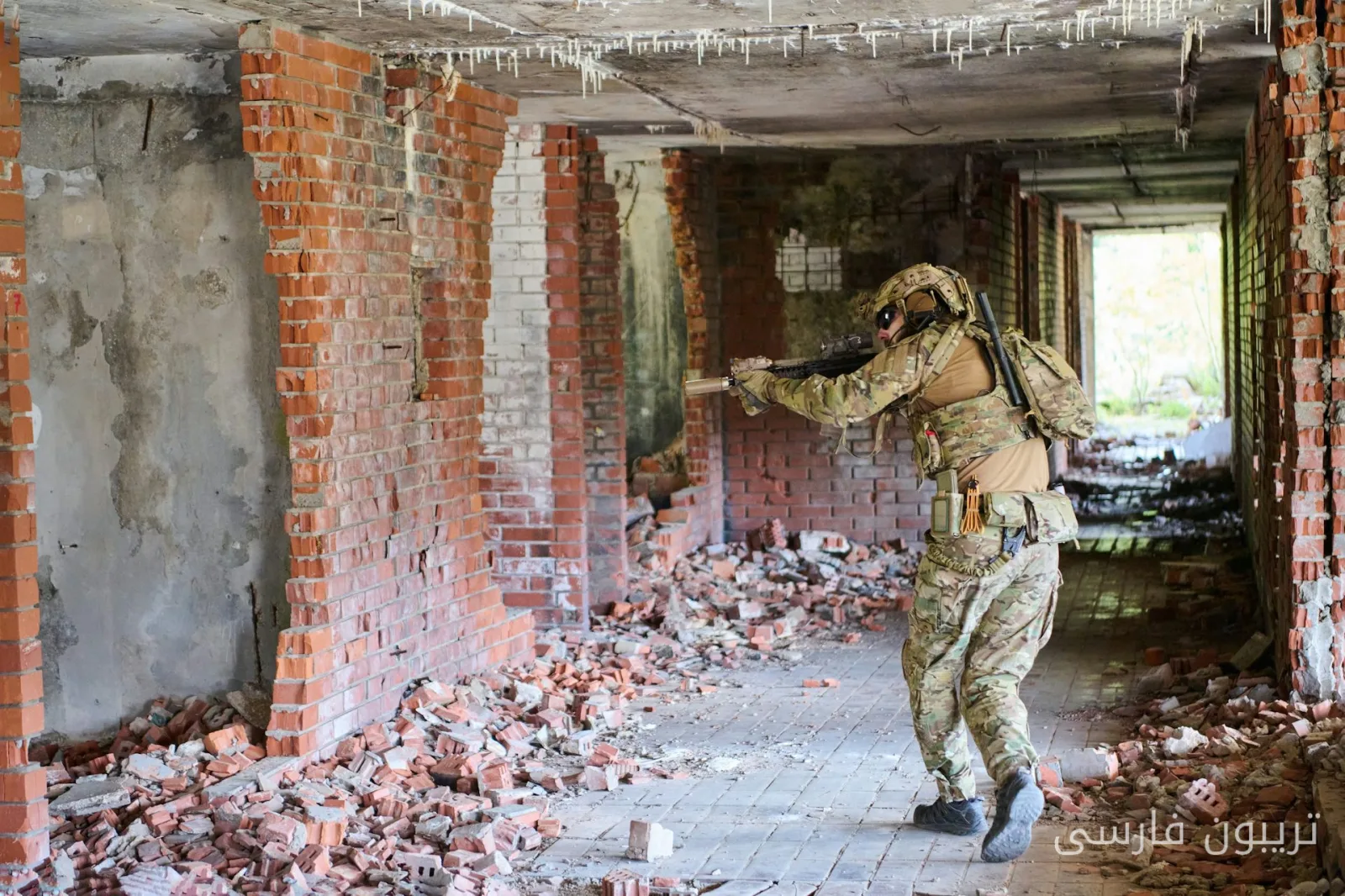
However, the question arises as to why an army needs complex and expensive human robots when it can utilize cheaper and more resilient drones? In open battlefields, tracked vehicles are clearly superior. But with the changing nature of warfare and the increasing role of urban environments, the use of human robots as a substitute for human soldiers becomes essential.
Human robots can easily navigate buildings designed for humans without the need for special designs or ramps. This feature makes them an efficient tool for military operations.
This issue leads us to a profound ethical dilemma. Many of us in the field of robotics do not endorse offensive wars, but these machines are clearly useful in defensive scenarios and for neutralizing threats. Using robots to rescue hostages or neutralize active threats can save human lives.
Moreover, the rapid advancements in robotics are easily accessible. Unlike nuclear technologies or stealth aircraft, modern robotics is built on open-source frameworks. With sufficient skill, a committed adversary can easily replicate advanced robotic behaviors. Therefore, we cannot view human robotics solely as an academic endeavor or a commercial innovation.
We must initiate an urgent international dialogue on how to control these advancements. Just as there are restrictions on the export of microchips and aerospace components, we must also focus on protecting the software architecture and training pipelines that empower these machines. The time has come for our policies to align with these developments.
Read more: The Future of Humanity is at Risk; Will Artificial Intelligence Destroy Us? · Francis Fukuyama and His Assessment of Trump, China, and the Legacy of 9/11