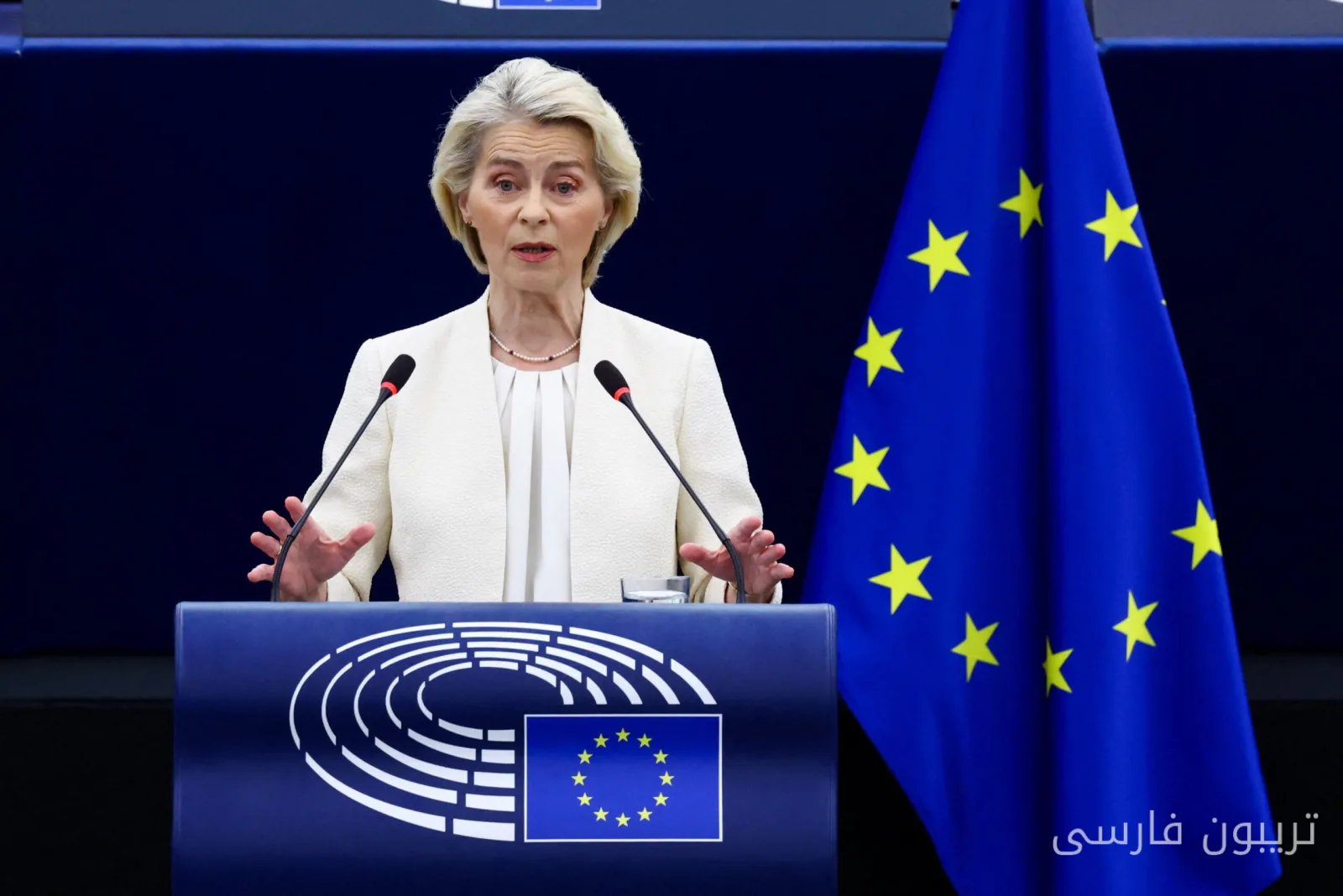
Ursula von der Leyen, President of the European Commission, in her speech at the annual meeting of the European Union on September 16, referred to the serious energy challenges exacerbated by the wars in Iran and Ukraine. This speech emphasized the need for a unified and pragmatic energy policy that addresses not only carbon emissions reduction but also security and competitiveness.
Identifying Challenges and the Need for Action
Von der Leyen rightly identified one of the main problems in Europe's energy sector: with high energy prices, Europe cannot maintain a strong industrial base and public support for the transition to renewable energy. This speech particularly pointed to the impact of Russian gas cuts and disruptions in the Strait of Hormuz, which have led to rising energy costs in Europe. For instance, the price of a gallon of diesel in Germany is now over $10.
Read more: Serious Damage to U.S. Military Readiness in War with Iran
While the identification of problems seems convincing, the proposed solutions are still not persuasive. Von der Leyen referred to a technology-neutral approach that should be implemented among EU institutions. This approach could lead to a pragmatic energy policy that focuses on practical solutions rather than ideology.
Energy Policy and Security
Europe should focus on delivering rather than setting ambitious goals. Environmental and climate objectives have become the main factors of energy policy, while broader balances have been forgotten. The key question is whether the European Union can create an energy policy that is compatible with its industrial assets and geopolitical uncertainties.
This challenge must be viewed in a broader security context. The war in Ukraine and growing hybrid threats indicate that energy infrastructures, including networks and storage facilities, are strategic infrastructures. Protecting these facilities against sabotage and cyberattacks must be part of Europe's security planning.
Europe's energy policy should not mean isolation but should signify freedom of choice and the capacity for cooperation from a position of strength. Europe must reduce dangerous dependencies while establishing sustainable partnerships with the United States, Canada, Norway, the United Kingdom, Australia, and other reliable partners.
Addressing energy challenges cannot be achieved through declarations alone. Europe needs a policy shift, investment, cross-border communications, and equitable distribution of transition costs. This approach could transform energy security into a project that unites Europe rather than a source of division.
Read more: The Need for Protective Layers in Artificial Intelligence Systems