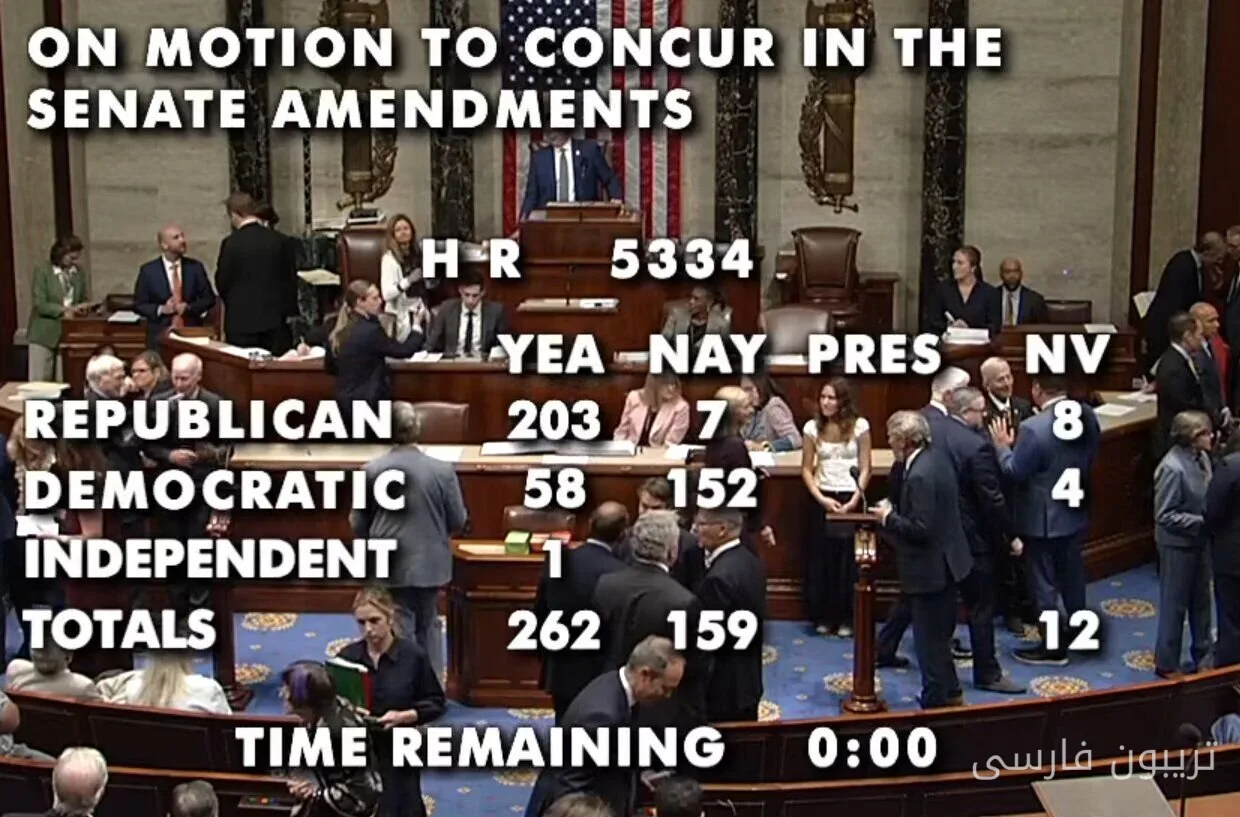
The U.S. House of Representatives, in a key vote, approved the "Lindsey O. Graham Russia and Iran Sanctions Act of 2026" with 262 votes in favor and 159 against. This bill, designed to impose comprehensive sanctions against Russia and Iran, has been sent to the White House for Donald Trump's signature.
Purpose of the Bill and Its Consequences
The main objective of this law is to severely reduce the revenue sources that finance Russia's war in Ukraine. A war that began in 2022 and has exacerbated international challenges and economic crises globally. This bill was also passed in the U.S. Senate with 86 votes in favor and is now recognized as one of the most ambitious actions in support of Ukraine.
Read more: Challenges Facing Saudi Arabia in the Yemen War and Oil Export Security
New Sanctions and Their Scope
The new bill includes targeted sanctions against Russian officials, oligarchs, and financial institutions. Additionally, banks and the so-called "shadow fleet" of oil tankers that assist in Russian energy exports will be sanctioned. Trump, as President, will be required to impose tariffs of up to 100 percent on five major importers of Russian oil and natural gas. Countries that import less than 15 percent of Russia's natural gas exports will be exempt from these sanctions.
Furthermore, this bill allows for high tariffs on imported goods from China, provided that China continues to purchase oil from Russia. This approach is somewhat based on the assumption that imposing tariffs could compel China to reduce its energy imports from Russia.
Continued Pressure on Iran
The bill also includes an extension of sanctions powers against Iran, particularly in areas aimed at reducing financial resources for the country's military and energy sectors. This action will effectively strengthen previous sanctions and continue the pressure on Iran.
Ultimately, this bill clearly indicates that the United States seeks to strengthen sanctions and economic pressures on both Iran and Russia, thereby achieving its political and military objectives on the international stage. The passage of this bill could have deeper implications for international relations and the global economy.
Read more: Independent Politicians Against Albanese for Inequality in Resource Allocation · China Can Help Resolve the Iran-U.S. Dispute