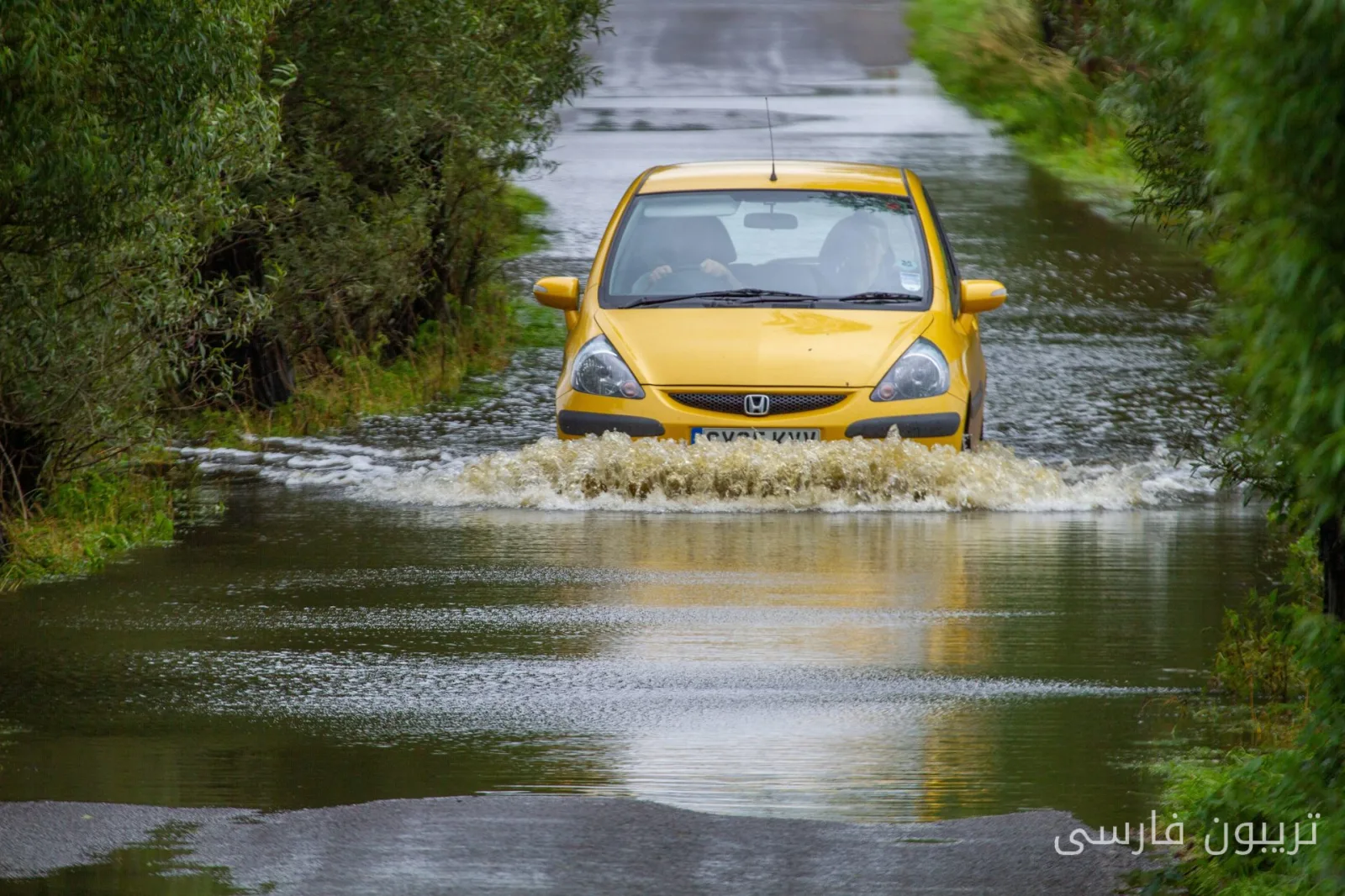
New research indicates that driving in flooded waters is the primary cause of death in flood incidents. Given the climate changes leading to heavier and longer rainfall in the Northern Hemisphere, the risk of flooding has particularly increased in the fall and winter.
Factors Influencing Driver Decision-Making
In England, several deaths in recent years have been reported, especially in areas like Derbyshire (2021), Liverpool (2023), and Lancashire (2024). Research shows that many drivers expect only their vehicles to be damaged, while driving in flooded waters can lead to drowning. In fact, vehicles may initially float on water due to their design, and as a result, may drift downstream.
Aware and Unaware of the Dangers
A national survey of 185 drivers revealed that nearly 80% of them recognize water depths over 25 centimeters as dangerous. However, most do not understand the impact of fast-flowing water in flood conditions. When asked how they assess water speed, their responses are usually based on water depth. This is concerning because while deep water can stabilize a vehicle, flowing water can carry it downstream.
Drivers typically assess their ability to cross water based on the capabilities of other vehicles, while it is more logical to evaluate water depth using roadside indicators such as water gauges on roads or the height to which water has risen on signs, fences, and grass.
Moreover, there is still no guidance on how to deal with flooded waters in the UK highway code. Static flood warning signs are generally ineffective because drivers do not trust them and leave them unchanged for long periods after the water has receded.
For this reason, a dynamic LED sign system has been developed that instantly informs drivers about flooding conditions. Tests have shown that dynamic signs are significantly more effective and memorable for drivers.
Drivers should remember that they should only cross water if the depth is less than 10 centimeters for standard vehicles and a maximum of 30 centimeters for SUVs. Any doubt in this regard should lead to stopping and finding an alternative route.
Read more: The U.S. House of Representatives passed a bill imposing extensive sanctions on Russia and Iran · Researchers warn about land instability in the Shiraz Mountains