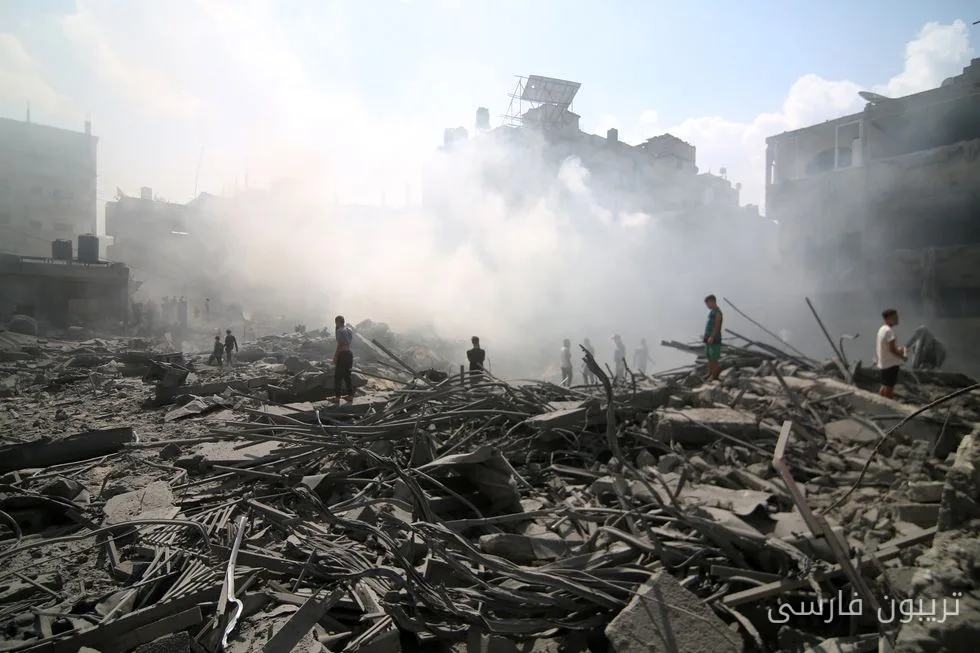
Hosseini Kiamanesh: As time passes since the beginning of the war between the United States and the Israeli regime against Iran on February 28, the dimensions of the strategic deadlock that Washington has found itself in become more apparent. A war that was supposed to strip Iran of its military and strategic power based on the military superiority of Washington and Tel Aviv has now reached a point where even in the assessments of some strategic circles within the United States, its consequences cannot be explained solely with military achievement terminology.
Changing Security Equations
The issue is not just that Iran has survived this war or managed to maintain its military and strategic capacities; the more important matter is that the war has entered a new phase for the equations that the United States has built over four decades to contain Tehran in West Asia. In fact, the subject has gone beyond the outcome of a few military operations and pertains to the future of regional order; an order in which the United States was the main guarantor of the security of the Arab countries bordering the Persian Gulf for decades, but now signs of change in this equation are more visible than ever.
Read more: Australia and the Next UN Secretary-General Need Each Other
Strategic Failure of the United States
On the other hand, the United States is faced with a bitter reality and a humiliating defeat: after six and a half months of war, not only has Iran not been eliminated, but some of Washington's most important strategic pressure tools in the region have also faced challenges. The think tank "Center for Strategic and International Studies" (CSIS) has pointed out the significance of this issue in an analysis and referenced the words of Vali Nasr, a senior advisor at this think tank. Nasr believes that the United States and the Israeli regime entered the war with the aim of redesigning West Asia, but the outcome of the war, contrary to their calculations, has been that Iran has not only not exited the scene, but the United States is facing a reduction in its influence in the future of the region.
Nasr points out that the initial calculation of the United States was that attacking Iran would overthrow the Islamic Republic, and if such a goal was not achieved, at least it would severely reduce Iran's nuclear and military capabilities. However, in reality, Iran has become a regional power that can set the rules of the game.
Collapse of U.S. Security in the Persian Gulf
Vali Nasr's analysis also refers to Iran's attacks on U.S. military infrastructure in the region. These attacks have effectively destabilized the security architecture that Washington has imposed on the region for decades. U.S. military bases, which were supposed to act as guarantors of security, have now themselves become targets of attacks. This change in equation reflects the weakness of the U.S. ability and will to defend its interests in the Persian Gulf.
Ultimately, the recent war has not only preserved Iran's military capabilities but has also led to the gradual collapse of the U.S. security architecture in the Persian Gulf. It seems that these developments will significantly impact the future of the security order in the Middle East.
Read more: Changes in Russia's Space Strategy Following the War and Sanctions · Development of Defense Cooperation Between South Korea and Europe Amid New Threats