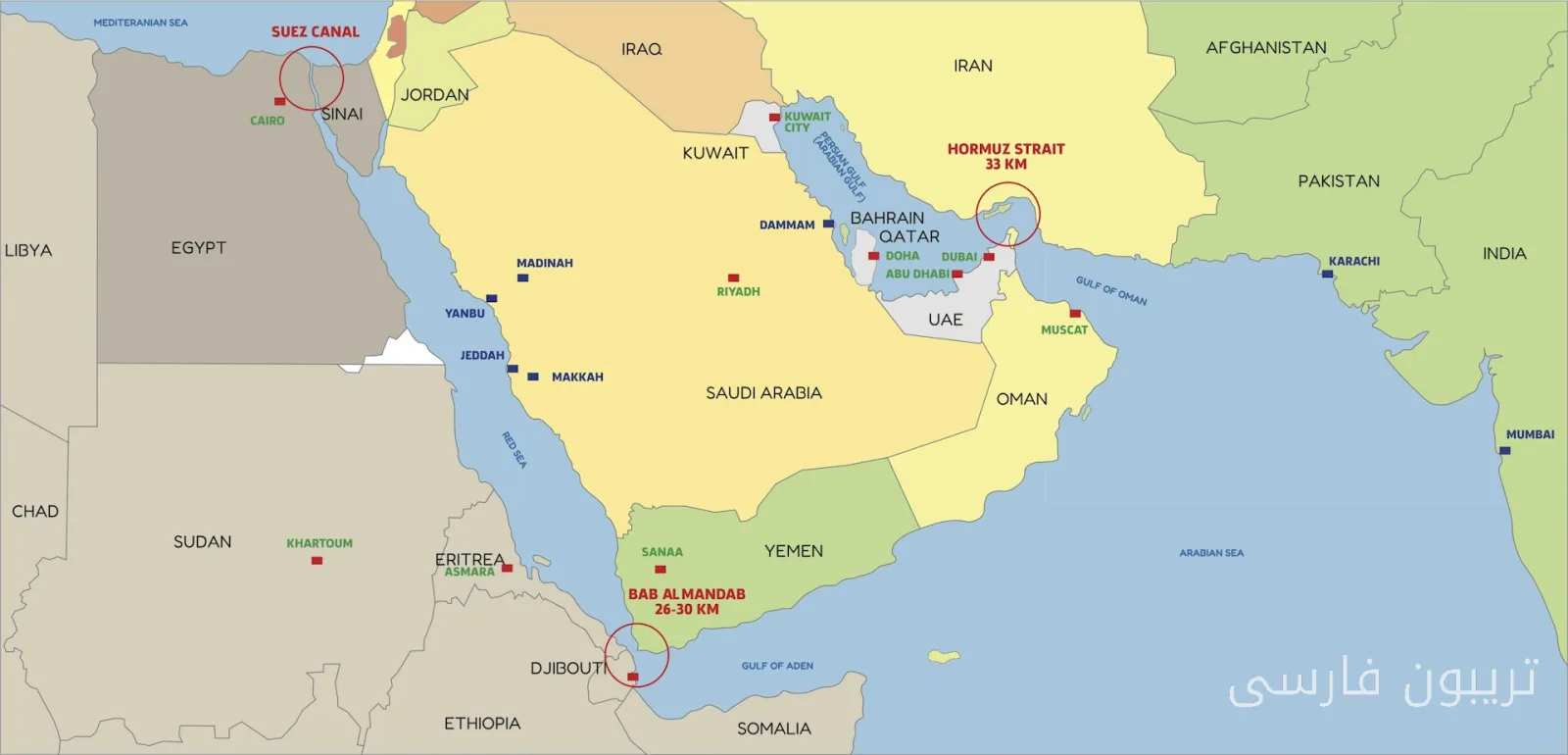
The Houthis, having seized the port of Mokha and the island of Meyun, now have almost complete control over the Red Sea coasts of Yemen. This dominance allows Iran, as its most powerful proxy in the Middle East, to control about 12% of global trade that passes through this waterway. This also increases pressure on the Strait of Hormuz, which has led to a reduction in oil flow from about 9 million barrels per day to between 3.7 and 6.4 million barrels.
Deep Divisions in BRICS
The BRICS bloc, which represents 49.5% of the global population and 40% of the world's GDP, is now facing deeper challenges. The new Delhi statement, which makes no reference to the Red Sea, Bab al-Mandab, Yemen, or the Houthis, reflects these divisions. In fact, this statement makes no mention of maritime security or freedom of navigation, which itself indicates the depth of the crisis within this bloc.
Read more: Strengthening Relations with the Global South: A Priority of Vladimir Putin's Recent Diplomacy
Economic and Security Implications
The Houthi control of the Bab al-Mandab Strait places Saudi Arabia in a vulnerable position. The country's East-West pipeline, built to bypass the Strait of Hormuz, now ends on the Red Sea shores that are under Houthi control. Meanwhile, Egypt is also dependent on revenue from the Suez Canal, and a decrease in maritime traffic has severely impacted the country's income.
Recent Houthi developments not only fuel insurers' concerns but also likely increase costs that will hinder maritime traffic in the Red Sea. Additionally, the United Arab Emirates has suspended all trade and financial transactions with Iran in August, further exacerbating tensions in the region.
China and India, the world's largest oil importers, need the Strait of Hormuz to remain open to keep global oil and gas prices low. In contrast, Russia, which exports through other routes, actually views the reduction of these straits as economically beneficial.
These divisions within BRICS and the inability to present a united voice undermine the bloc's credibility on the global stage. As this bloc continues to expand, while simultaneously introducing a range of unresolved crises, its ability to reach consensus on key issues significantly diminishes.
Read more: Analysis of the Concept of Zionism and Its Dimensions · Houthi Control of the Red Sea Port: Tehran's Closer Approach to Strategic Waterways