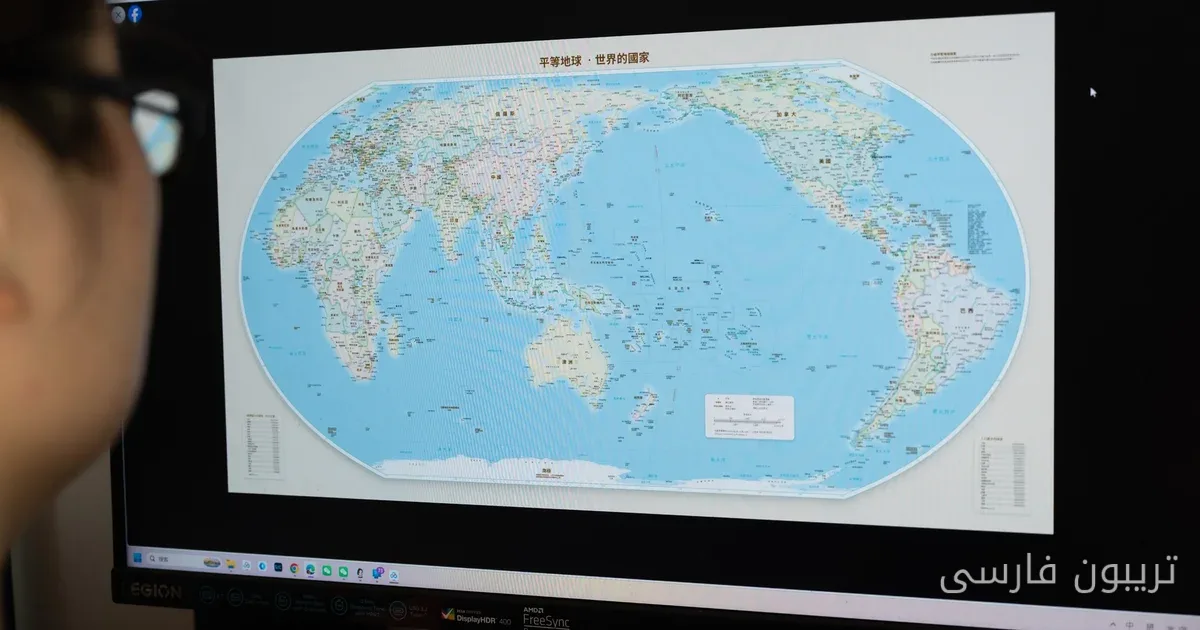
The United Nations General Assembly moved towards creating a fairer map to display the world by adopting a resolution on behalf of Togo and with the support of the African Union. This resolution was passed with 164 votes in favor and one against, recommending that governments, schools, international organizations, and technology companies use equal-area projections like the "Equal Earth Map" that accurately represent the true size of landmasses.
Mapping Challenges and Their Political Dimensions
Maps were initially designed as technical tools to represent geographical spaces, but over time, they have become political symbols. The "Map Reform" resolution, which emphasizes the importance of fair representation, actually exacerbates contemporary sovereignty and historical challenges. For example, the Mercator map, developed in the 16th century, was particularly suitable for navigation, but disproportionately enlarges the size of landmasses near the equator. This leads to misconceptions about the geographical significance of various regions of the world.
Read more: Examining the Roots of the Success of Far-Right Parties in East Germany
Global Reactions and Implications
Countries abstaining from the vote also represent sovereignty concerns. Ukraine, for instance, did not vote for this resolution due to how the Equal Earth Map displays territories occupied by Russia. Additionally, India and Japan, which voted in favor of the resolution, later raised concerns about how their disputed territories would be represented. This indicates that even in the effort to represent the world more fairly, sovereignty and border issues remain at the forefront.
The United States, as the only country to vote against this resolution, regarded the action as part of a radical ideological project and expressed concerns about the credibility of the United Nations in this regard. This issue becomes particularly important as attention to fair representation in geographical and historical matters can contribute to a better understanding of global politics.
Ultimately, although this resolution is not binding and governments and institutions are not obliged to adopt it, it could help shape new educational methods in schools. In classrooms, the use of fairer maps can aid in changing attitudes and misconceptions about geography and global politics.
Read more: Ed Sheeran and Political Challenges in the World of Music · Marlon James' Novel "The Vanishing" Amplifies the Voices of Gay Men in Jamaica