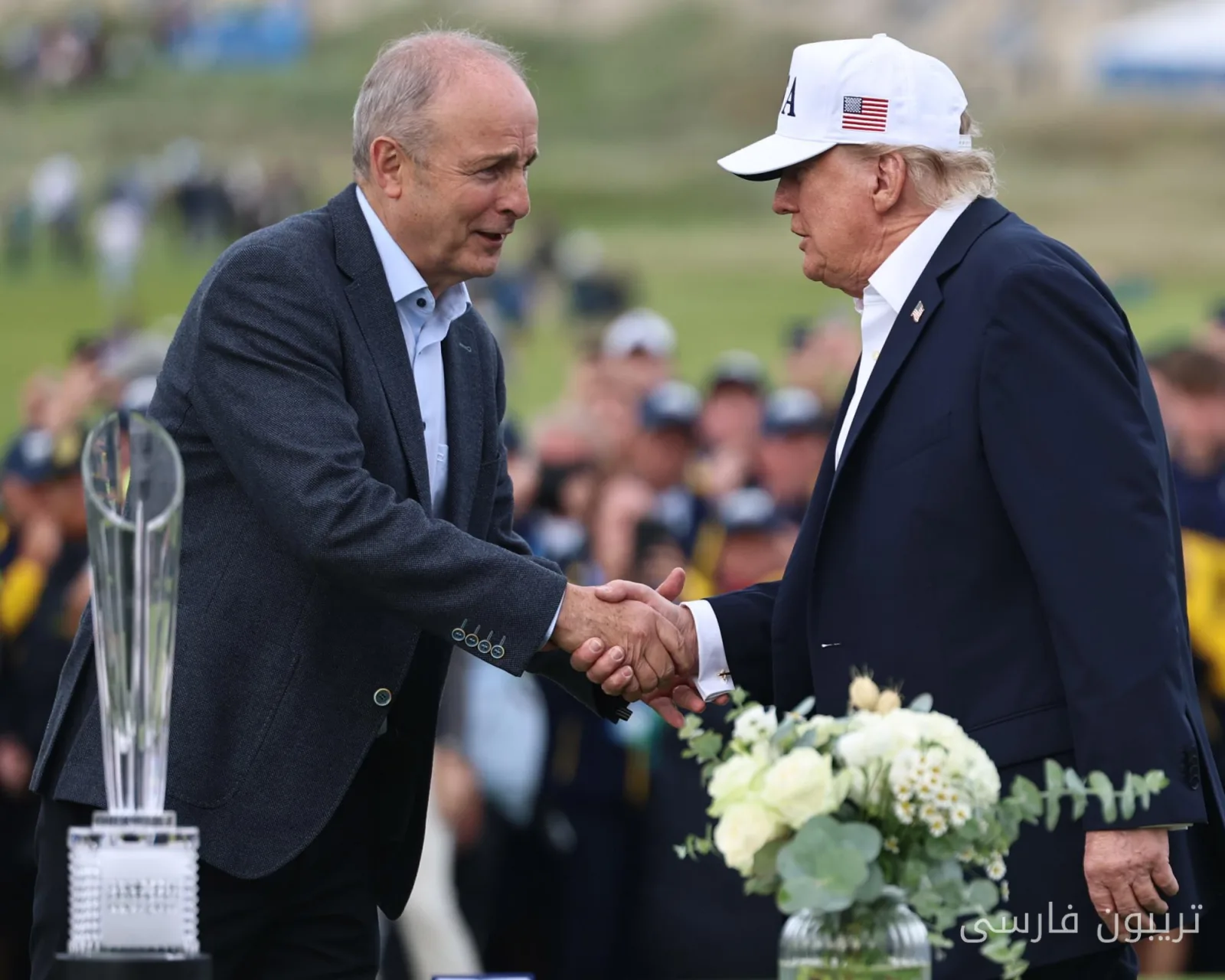
New developments in the discussion of a united Ireland clearly indicate changes in the political dynamics of the region. Donald Trump's recent comments during his unofficial visit to Ireland, where he expressed interest in a united Ireland, immediately elicited reactions at various political levels.
Significant Changes in Political Balance
A decade ago, the Democratic Unionist Party (DUP) viewed Brexit as an opportunity to counter future pressures for a united Ireland. According to analyses, the party hoped that the 2016 referendum would somehow lead to a double separation and retreat from the process of integration with the Republic of Ireland. However, reality has shown that this assessment was severely misguided.
Read more: Criticism of School Choice Policies and Ignoring Migrant Students
After 2016, instead of leading to a hard border between Northern Ireland and Ireland, the divorce agreement between Britain and Brussels ultimately created a new border in the Irish Sea and helped solidify further economic integration between the North and South. Demographic changes also indicate an increase in the number of people with a Catholic background in Northern Ireland, which contributes to changing political equations.
The Necessity of Deep and Cautious Discussions
In 2022, Sinn Féin achieved a historic victory in the Stormont elections, and Michelle O'Neill was appointed as the first nationalist minister of Northern Ireland. However, Trump's comments should be seen as a warning. Although O'Neill has pointed to Trump's statements as a sign of "growing dialogue" about fundamental changes in the constitution, the reality is that this discussion has not yet seriously begun and requires careful and thorough examination.
The Good Friday Agreement of 1998 intentionally contains ambiguities regarding the conditions for holding a referendum, and the governments of London and Dublin have preferred to focus on cross-border cooperation. Given Ireland's tense political history, this approach seems reasonable. However, in light of recent developments, the status of discussions is clearly changing.
In the short term, Andy Burnham's position, the Mayor of Manchester, that holding a referendum on a united Ireland is "not on the agenda," seems logical. However, all parties must be vigilant about holding a vote without adequate preparation. There appears to be a widespread commitment to unity in the Republic of Ireland, but in Northern Ireland, there are concerning signs of renewed tensions that require attention.
Ultimately, a thorough and long-term public dialogue about the potential formation of a union and its costs is essential. Gordon Brown, the former Prime Minister, rightly pointed out that "in the long run, Ireland will unite" but this path requires broad and deep agreement among the people. This warning should be heeded by leaders of all parties.
Read more: Challenges of Regulating Artificial Intelligence and Us · A War Lost in History: 'The Uprising' and the Revolt of Medieval Peoples