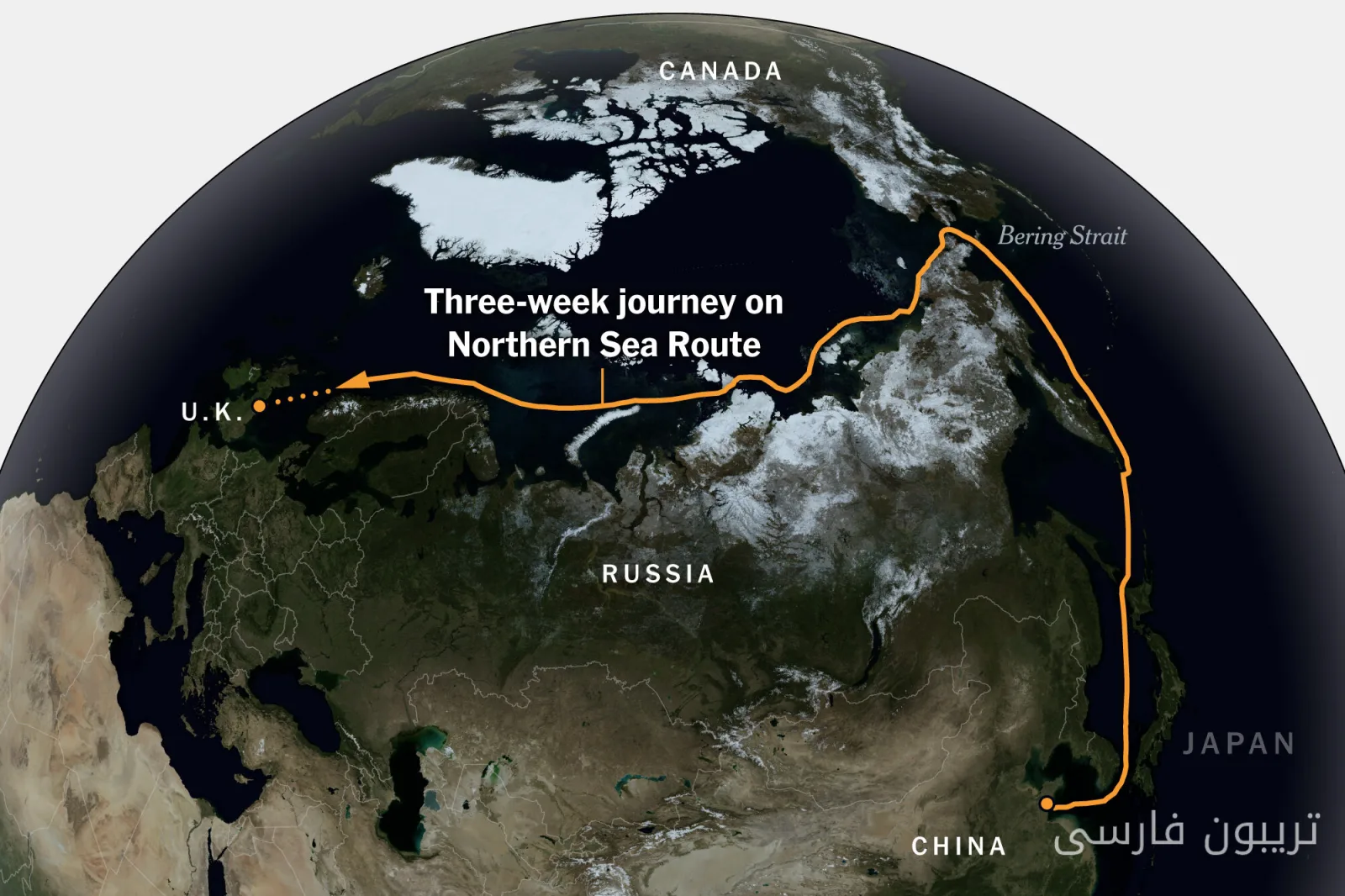
In today's world, geography is not just a map; it is an economic and political battlefield. With the melting of Arctic ice, China has emerged as a key player, launching its first regular trade service in the region. This comes at a time when many countries are trying to exploit these environmental changes to their advantage.
Trade with New Risks
China's new service, known as the "Northern Route," travels from Chinese ports to Europe and America, significantly reducing shipping times. But this is only one side of the story. Is this move merely a clever business strategy, or is China attempting to demonstrate that it holds a power beyond the past in global equations?
Analysts believe that with this move, China aims to achieve its economic goals while simultaneously strengthening its military and political power in the region. In fact, in addition to facilitating trade, this action could serve as a tool for increasing China's influence in global equations.
The Future of Trade in the Arctic
Some countries, especially in the West, are concerned that China's increased influence in the Arctic could become a threat to their national security and economic interests. While the melting ice presents new opportunities, these concerns become particularly serious in environmental and political contexts.
Given these developments, it remains to be seen whether other countries will join the ranks of players in this arena or if China will remain the dominant power in the Arctic. Can China be recognized as a reliable trade partner, or will this route turn into a tense competition?