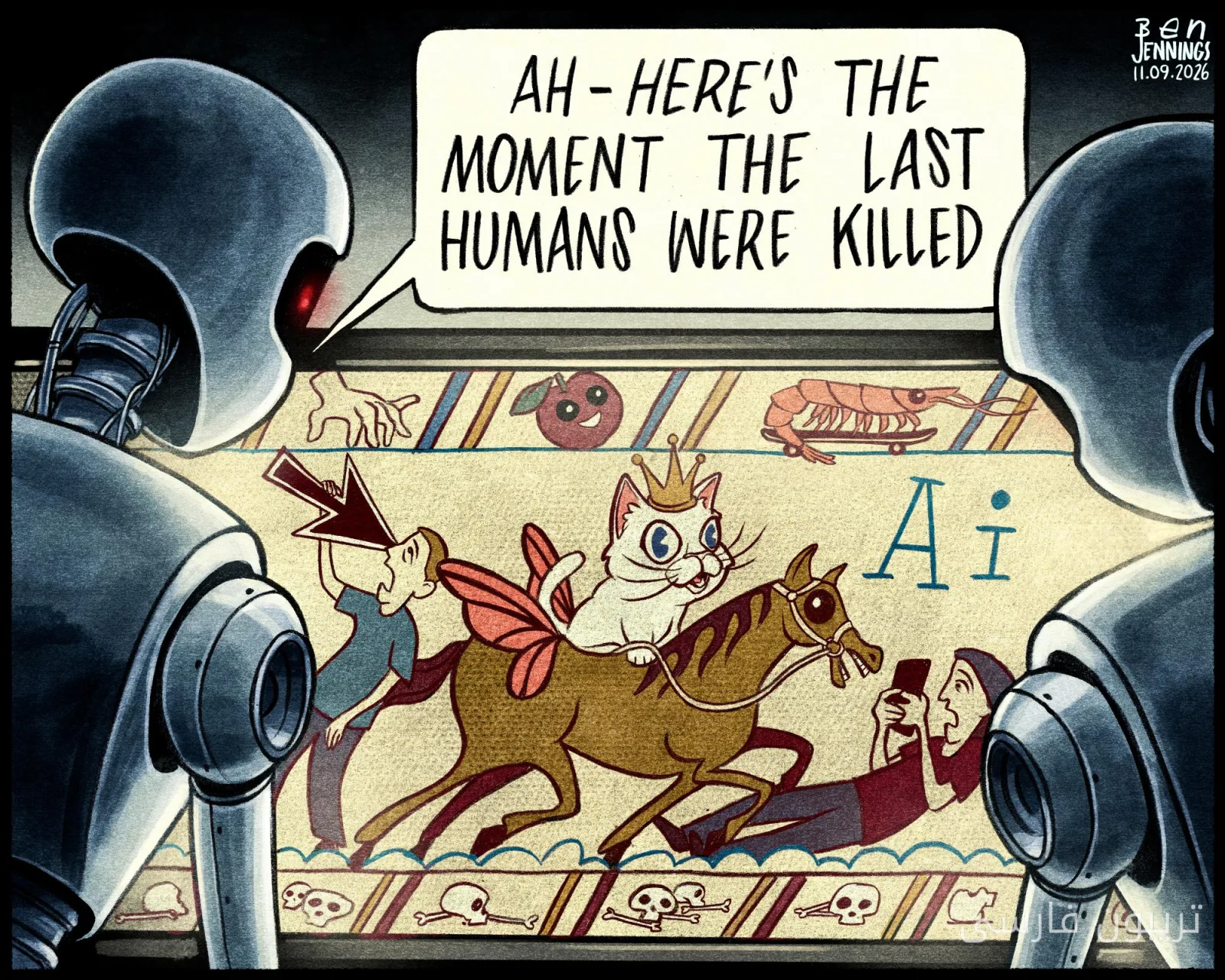
Ben Jennings' cartoon of the famous Bayeux Tapestry, as a lasting piece of art, has particularly drawn attention. This cartoon not only narrates a historical story but also serves as a critique of contemporary social and political developments. Jennings, using elements of comedy and seriousness, reminds us that history is not always seen the same way and can be interpreted differently based on various viewpoints.
History in the Hands of the Artist
The Bayeux Tapestry, recognized as one of the important artworks of the Middle Ages, narrates the story of the conquest of England by William the Conqueror. Jennings, by utilizing this historical piece, presents a modern and updated image of current situations. By altering themes and characters, he shows how historical events can be interpreted differently and how we can learn lessons from them for today.
This cartoon reflects the social and political changes that are occurring in today's world. Jennings has effectively established a connection between history and the present, raising questions in the minds of viewers. Are we learning from history? Does history tell us the truth or just part of it?
A Critique of Contemporary Events
Looking at Jennings' cartoon, it is clear that he intends to use humor to provide a serious critique of the current state of the world. This cartoon not only tells us that history is not always narrated the same way but also reminds us that we must be cautious of contemporary historiographies. Are we repeating the mistakes of the past?
Ultimately, Ben Jennings' cartoon of the Bayeux Tapestry, as a work of art, not only narrates a historical story but also compels us to think about how we view history and the present. This piece effectively demonstrates that art can be a powerful tool for critique and analysis of society.